Showing posts with label leadership. Show all posts

Wednesday, 22 July 2026

Young Cumbrian Entrepreneurs Showcase Innovative Businesses Through Positive Enterprise Programme

Young entrepreneurs from Furness and West Cumbria have celebrated the success of the Positive Enterprise programme, turning creative business ideas into thriving ventures with mentoring and funding support.

A new generation of young entrepreneurs in Cumbria is proving that great business ideas can come from anywhere, with ventures ranging from AI-powered technology and sustainable furniture restoration to authentic Nigerian cuisine and creative fashion design.

Fifteen aspiring business owners aged between 14 and 25 from Furness and West Cumbria celebrated the success of the Positive Enterprise programme this week after spending the past six months developing their businesses with expert mentoring, practical training and financial support.

Run by Cumbria Community Foundation in partnership with the Centre for Leadership Performance (CforLP), the programme was designed to help young people transform promising ideas into viable businesses. Each participant received a £1,000 start-up grant earlier this year, enabling them to launch or expand ventures as diverse as pet photography, mobile make-up services, fragrances inspired by the scents of Cumbria, gutter cleaning, AI virtual assistants and specialist food businesses.

The programme culminated in celebration events at the Carnegie Theatre in Workington and The Bridge in Barrow, where participants presented their business journeys, sharing both their achievements and the challenges they had overcome.

In West Cumbria, 21-year-old Maria Ferreira from Workington impressed judges with her business, Ferrocious Furniture, which restores and reupholsters unwanted furniture. She received an additional £1,000 investment, which she plans to use to run workshops teaching others how to upcycle household items instead of throwing them away.

Maria said she hopes to inspire more people to see creative careers as a genuine possibility, particularly in areas where opportunities can feel limited. Her mentor, Rachel Stewart, praised her determination and described the mentoring experience as a rewarding team effort.

Runner-up Holly Chamberlain, 20, from Cockermouth, received £500 for her sewing and knitting pattern business, Un Petit RĂªve, where she designs clothing, creates knitting patterns and hosts workshops encouraging others to develop crafting skills.

Meanwhile, the programme expanded into Furness for the first time this year. Barrow entrepreneur Travis Drake secured the top award of £1,000 for Buzz Trackers, an innovative device designed to help people locate frequently misplaced items such as television remote controls. Travis credited both the funding and the guidance of his mentor, James Batchelor, with helping him refine his business ideas.

The Furness runner-up was 18-year-old Rukky Jokoh, whose business Rukky's Naija Hub brings authentic Nigerian food to local customers. She said the programme had enabled her to transform a personal passion into a sustainable business.

The Positive Enterprise initiative is now in its fourth year in West Cumbria and made its Furness debut in 2026. Funding has come from organisations including Sellafield Ltd, the Printers Inc Social Mobility Fund, Thomas Graham & Sons Ltd, private donors and supporters committed to improving opportunities for young people across the region.

Beyond financial backing, participants benefited from experienced business mentors, leadership training and practical workshops covering essential entrepreneurial skills including negotiation, time management and business planning.

Organisers believe the programme continues to grow in both quality and impact, helping ambitious young people gain the confidence, networks and experience needed to build successful futures.

Applications for the 2027 Positive Enterprise programme will open later this year, with opportunities available for both aspiring entrepreneurs and volunteer business mentors.

For readers interested in taking part or volunteering as a mentor, more information about the Positive Enterprise programme is available from Cumbria Community Foundation. https://www.cumbriafoundation.org/fund/positiveenterprise

Thursday, 25 June 2026

New Book Shows Businesses How to Navigate Technological Disruption

Discover how The Z-Curve by Alberto Torres helps business leaders understand AI, quantum computing and technological disruption to build long-term success.

New Book Explains How Businesses Can Stay Ahead of Technological Disruption

The pace of technological change is accelerating at an unprecedented rate, leaving many organisations struggling to keep up. 

From artificial intelligence and automation to quantum computing and genetic engineering, businesses are facing a rapidly evolving landscape that demands constant adaptation.

A new book, The Z-Curve: Navigating Your Business Through Technological Disruption, by business strategist Alberto Torres, aims to give leaders a practical framework for understanding how technological disruption unfolds and how organisations can position themselves for long-term success.

Today's businesses are operating in an environment where technological innovation is closely intertwined with global politics, competition for critical supply chains, and the race to control valuable data. As nations invest heavily in emerging technologies, companies are being forced to rethink how they compete, innovate and future-proof their operations.

The book introduces the concept of the "Z-Curve", a model designed to help organisations recognise the warning signs of disruption before it is too late. Rather than simply reacting to change, the framework encourages leaders to anticipate technological shifts and develop strategies that build resilience and sustainable growth.

History offers plenty of examples of companies that successfully embraced change, alongside those that failed to adapt. Technology giants including Apple, Amazon, Google and NVIDIA have transformed industries and achieved remarkable growth, while once-dominant household names such as Xerox, Nokia, AOL and Blockbuster have seen their influence fade as markets evolved.

According to Torres, the next wave of disruption is already underway. Advances in generative and agentic AI, quantum computing and biotechnology are expected to reshape industries even more dramatically over the coming decade.

Drawing on a series of real-world business case studies, The Z-Curve examines both successful transformations and costly failures, providing practical lessons for executives, managers and entrepreneurs seeking to navigate uncertainty with greater confidence.

Torres, a former senior executive and Partner at McKinsey & Company, is currently a member of Adobe's International Advisory Board and an Adjunct Professor at IE Business School. He believes technological disruption is no longer an occasional challenge but an ongoing reality for every organisation.

He said: "Technological disruption is no longer a distant threat; it is a constant reality for every organisation. Understanding how it works is the first step towards managing it successfully. The Z-Curve gives leaders a way to see disruption more clearly and act with confidence."

As technology continues to redefine the business world, books such as The Z-Curve provide valuable insights for leaders looking to remain competitive in an increasingly unpredictable future.

The Z-Curve: Navigating Your Business Through Technological Disruption is published by LID Publishing on 25 June 2026. Available in hardback (ISBN: 9781917391672), priced at £19.99.

For more about LID Publishing, please visit www.lidpublishing.com

You can buy the book at a discounted price here:- https://amzn.to/4xQOATn

Wednesday, 10 June 2026

Why Staff Training Is Essential for Every Business

Or why training should be at the heart of every business. 

Discover why training should be a core part of every business strategy, helping improve customer service, staff retention, productivity and long-term success.

Whether you run a small independent cheesemonger, manage a multi-branch chemist chain, or lead a professional business consultancy, one thing remains true: your people are your greatest asset. Yet far too many organisations still view training as an expense rather than an investment.

That mindset can prove costly.

The difference between a thriving business and one that struggles often comes down to the knowledge, confidence and professionalism of the people representing it every day.

Every Customer Interaction Matters

Customers judge businesses on the experiences they receive. A knowledgeable member of staff who can answer questions, offer advice and provide excellent service can turn a casual visitor into a loyal customer.

Conversely, poor service can drive customers away for good.

Imagine walking into a specialist food shop looking to spend a significant amount of money. If staff appear distracted, disengaged or more interested in personal conversations than serving customers, that potential sale may be lost. Worse still, the customer may never return.

A very dirty public-facing part of a national pharmacy chain
Training helps employees understand the importance of customer service, communication skills and professional behaviour. It ensures they recognise that every interaction has the potential to strengthen or damage the business's reputation.

And a business that doesn't teach and practice could cleaning and hygiene practices will put off potential clients or worse, potentially make people ill. 

Small Businesses Need Training Too

There can be a misconception that training is only for large corporations with substantial budgets.

In reality, small businesses often have even more to gain.

When a company has only a handful of employees, each person's performance has a significant impact on customer satisfaction and profitability. A single poor experience can affect online reviews, word-of-mouth recommendations and repeat business.

Regular training sessions do not have to be expensive. They can involve product knowledge updates, customer service workshops, health and safety refreshers or simply discussions about business values and expectations.

Keeping Skills Up to Date

Markets change constantly. New technologies emerge, regulations evolve and customer expectations shift.

Businesses that fail to train their staff risk falling behind competitors.

A chemist chain must ensure employees understand new healthcare guidance and products. A consultancy firm needs staff who are familiar with the latest industry trends and best practices. Retailers need employees who understand changing consumer behaviour and digital tools.

Training keeps businesses agile and competitive.

Building Employee Confidence and Retention

Employees who receive regular training often feel more valued and supported. They gain confidence in their roles and are better equipped to handle challenges.

This can lead to higher job satisfaction, improved morale and lower staff turnover.

Replacing employees is expensive. Recruiting, onboarding and training new staff can cost far more than investing in the development of existing team members.

A Competitive Advantage

In a world where customers have countless choices, exceptional service can be a powerful differentiator.

Products can often be copied. Prices can be matched. What competitors cannot easily replicate is a team of well-trained, engaged employees who consistently deliver outstanding experiences.

Training should not be viewed as an optional extra or something reserved for large organisations. It is a vital business function that directly influences customer satisfaction, employee performance, profitability and long-term success.

From the smallest independent retailer to the largest national chain, businesses that invest in their people are investing in their future.

Tuesday, 24 March 2026

New Book Argues that in the Age of AI, Leaders Must Become Orchestrators, Not Controllers

LID Publishing has announced the publication of: Lead with AI. Stay Human. How Modern Leaders Orchestrate Enterprise Value, by AI transformation strategist Peter Whealy. The book publishes on 26 March 2026 (UK) and 28 April 2026 (US).

Artificial intelligence is reshaping organizations at unprecedented speed. While AI systems evolve daily, leadership models remain anchored in outdated assumptions about expertise, authority, and control.

In the AI era, knowing more is no longer enough.

In Lead with AI. Stay Human, Whealy argues that the leaders who will thrive are not those with the most answers, but those who can orchestrate judgment, trust, learning, and technology across increasingly complex systems.

“AI doesn’t replace leadership, it exposes it,” Whealy told That's Business. “The question is no longer who has the best expertise, but who can align human and machine intelligence to create value under pressure.”

Drawing on decades of experience advising global organizations on transformation, Whealy introduces four essential Conductor Capabilities for modern leadership:

Judgment Under Ambiguity. Knowing when to pause and when to accelerate, maintaining coherence even when certainty disappears.

Trust Stewardship. Scaling transparency, psychological safety, and accountability beyond the leader’s direct reach.

Adaptive Learning. Designing systems where learning velocity exceeds change velocity.

Enterprise Orchestration. Aligning direction, decisions, and values across boundaries so context travels with insight.

Peter Whealy
At the heart of the book is the SPAR framework a practical developmental rhythm for building these capabilities at scale:

Strengthen your leadership identity

Partner with AI as a strategic sparring partner

Amplify team capability through systemic trust and learning

Reshape organizations for adaptive flow

Rather than treating AI as a tool, Whealy reframes it as a leadership inflection point — one that demands increased judgement and greater humanity.

Miriam Kugel, Microsoft, AI Transformation Advisory, writes: “Peter Whealy provides a clear, practical blueprint for building a ‘frontier firm’ mindset — one that unlocks human potential, empowers teams, and enables organizations to evolve so people thrive alongside AI as they navigate continuous transformation with confidence.”

Lead with AI. Stay Human. is written for all leaders currently navigating enterprise-scale AI adoption, who don’t want to sacrifice long-term performance, trust, or human potential.

Peter Whealy is the founder of Elevate Potential, a consultancy focused on AI-era leadership transformation. A former Partner at EY and other global consulting firms, he advises organizations worldwide on orchestrating greater enterprise value.

Thursday, 26 February 2026

Leader Connect: Revolutionising Leadership Training for Educators – Affordable, Remote, and Built by Neil Jurd OBE

Tired of costly, time-guzzling CPD that never really quite fits? Leader Connect (leader-connect.co.uk) is the online platform schools, trusts and universities are buzzing about delivering top-tier leadership development straight to teachers' and headteachers' laptops, no travel required.

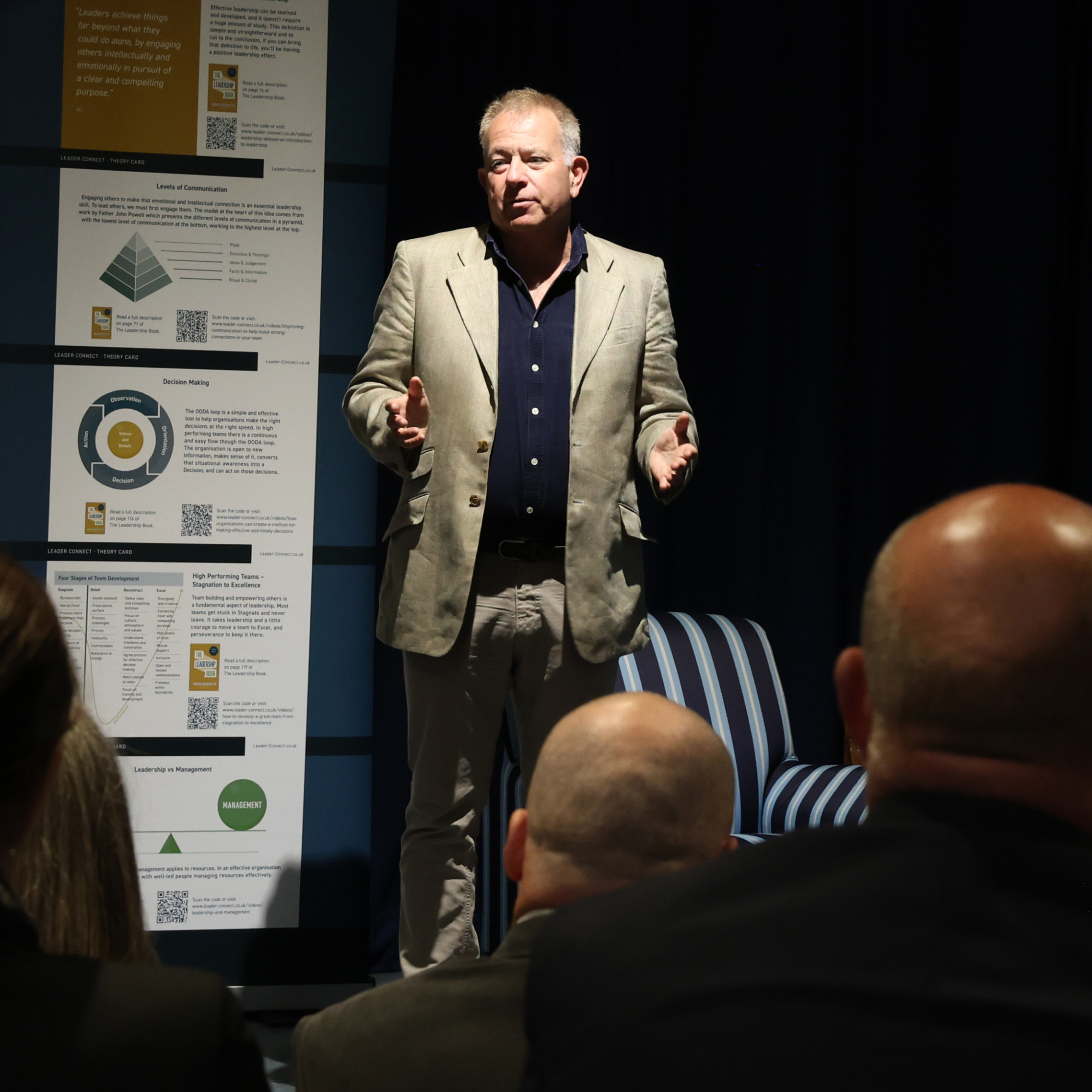
Created by Neil Jurd OBE, former Army lieutenant colonel(PICTURED), TEDx speaker, and author of the bestseller The Leadership Book, this platform turns real-world expertise into flexible, bite-sized courses. 

For just £25-£35 each, educators get masterclasses on building high-performing teams, equality and inclusion, tackling fear in schools, and leading through change, all backed by Neil's interviews with education stars like Glyn Potts MBE DL (headteacher insights), Rachel Diss (EDI in schools), and Dr. Brian Gregory (managing pressure). 

There is also content from a wide range of other experts including Headteacher Dr Victoria Carr, former RAF combat helicopter pilot Sarah Furness and mindfulness expert Maude Hirst. 

Trusted by Abingdon Learning Trust, University of Sheffield's leadership programmes, and more, Leader-Connect is ideal for remote training: watch videos, join podcasts, use the free leadership profiler, download tools, anytime, anywhere. 

No more annoying half-day absences; just practical wins that boost morale, retention, and pupil outcomes.  

It's proving very useful in Nepal where the Gurkha Welfare Trust have 15 senior leaders in remote locations across the mountainous country using the platform.  

"Leadership in education isn't theory, it's daily reality," Neil told That's Businesss. "We've made it accessible, fun, and stupidly good value. Headteachers tell us it's transforming how they lead."

With fresh content weekly, including school-specific sessions, Leader Connect is the smart way to upskill your staff without breaking the budget. Perfect for trusts, academies, and universities wanting measurable impact.

Friday, 30 January 2026

Why Calm, Consistent Leadership Matters More Than Ever

In a world where leadership is often loud, performative, and driven by constant urgency, particularly in the wake of burnout, disengagement, and sustained organisational change

If Bears Did Leadership offers a quieter, more reflective alternative.

Written by Karl Wood, an author and senior people and culture leader with nearly three decades of international experience, If Bears Did Leadership draws on twelve timeless lessons from the forest to explore what effective leadership looks like in modern workplaces. 

Using bears as quiet teachers rather than heroic symbols, the book focuses on presence, consistency, and care, qualities often overshadowed by speed, status, and performance.

Rather than presenting leadership as a set of rigid frameworks or quick fixes, Wood uses storytelling and metaphor to examine the everyday behaviours that build trust and credibility over time. 

Each chapter blends simple narrative with grounded professional experience, encouraging leaders to slow down, reflect, and practise leadership in ways that feel authentic and sustainable.

Beautifully illustrated by David Hallangen, the book is designed to be both a lasting resource and a thoughtful gift. Each of the twelve themes follows a repeatable four-week rhythm of reflection, thinking, action, and rest, supporting individual reflection, team discussion, and leadership development without urgency or pressure.

The foreword is written by Dr S. Y. Quraishi, former Chief Election Commissioner of India, whose experience leading one of the world’s largest democratic institutions reinforces the book’s emphasis on ethical, humane leadership and long-term responsibility.

Wood describes leadership as something shaped through daily behaviour rather than performance. Throughout the book, he explores how presence, reflection, and care create trust over time, encouraging leaders to step away from constant urgency and rediscover a calmer, more human way of leading.

If Bears Did Leadership is out on 27 February 2026 and is intended for leaders, managers, HR professionals, and organisations seeking a steadier, wiser approach to leadership in complex and demanding environments.

https://www.winchr.uk

Tuesday, 27 February 2024

New Important Book Explores the Role of Ego in Leadership

Ego Flip, written by James Woodcock, a Partner at Korn Ferry, is an important publication as it explores the crucial role that ego plays within leaders, their performance and that of their company or organisation. 

It examines the assumptions that have shaped the conventional view of leadership and offers a radical new paradigm and way to lead.

Knowing who you are is the most important question of leadership. Woodcock argues that leaders will never understand the world and their role within it until they understand where they are looking from. 

Such a leader will inevitably not lead but be led. In Ego Flip, the author presents his seven questions of leadership to help leaders better understand themselves and their egoic states. The book then explores seven ‘elucidations of leadership’ or tools to help the reader transform their life as a leader.

James Woodcock says: “From our organisations to our ecosystems, we are entering a new and profound era of change. The technologies we have asserted through our belief in progress, are ironically and inevitably accelerating us towards a future that is both unknowable and unsustainable. 

"None of this is the story we thought we were writing. And yet, as authors of our world, every choice we make is an invitation to lead. I wanted to write a book for leaders everywhere, to uncover what leadership really is. One that offers a radical new understanding, that addresses the perennial question of leadership, of the world within our world: the question of who you are.”

Through a new leadership manifesto (a set of eight conscious imperatives that offer a new vision for transcending the ego), the author provides a new pathway for leaders to reimagine what great leadership really means, to lead beyond the ego.

L. David Marquet, author of Turn the Ship Around and Leadership is Language, says: “Ego Flip earns my highest praise. It got me thinking. In this cerebral work Woodcock cracks a door open where we can begin to understand how our own sense of ’us’ may not be what we think it is.”

James Woodcock is a Partner in Korn Ferry’s Leadership and Professional Development Practice. Prior to that, he was a Managing Consultant at PA Consulting and a Senior Manager at Deloitte. For the past 20 years, James has worked across the globe helping leaders fulfil their potential.

Ego Flip is published on 14 March 2024 by LID Publishing, available as a paperback and e-book.

For more information about LID Publishing, please visit www.lidpublishing.com

Wednesday, 21 February 2024

Leaders who vanish during a crisis leave stress and burnout in their wake

The Invisible Manager
Leaders who aren't present during a time of organisational crisis increase workers’ stress levels and the likelihood of them burning out, according to new research from several UK business schools, including Durham University Business School.

The researchers show when leaders are absent it creates a more toxic workplace, turning workers against management, as well as increasing workers’ stress, levels of absence and even turnover.

These are the findings of research by Peter Hamilton, Professor in HR Management at Durham University Business School, alongside Professor Robert McMurray and Dr Martyn Griffin from the University of Sheffield, Nicki Credland, Reader in Nursing at the University of Hull, and Dr Oonagh Harness, Lecturer at Northumbria University.

The researchers sought to examine the importance of senior-leader presence and absence on the “frontline” in times of crisis, focusing on ICU nurses during the COVID-19 pandemic as a case study.

The researchers conducted interviews with over 50 nurses from 38 different healthcare units in the UK and Ireland to better understand the workers’ experience during the COVID-19 pandemic, the support they received from managers and their emotions through this period.

The findings show many frontline nurses noted feeling deserted by senior leaders during the crisis. This, participants said, led to a lessened feeling of collective suffering, with leaders alienating themselves from the real challenges faced by workers. This increased the feeling of stress, burnout and even absenteeism for staff.

For frontline workers whose senior leaders were present and supportive during the crisis, the research reported a much more positive take on their ability to work through and cope with crisis. Senior leaders who showed willingness to work on the same tasks as workers also helped provide a greater sense of togetherness during the crises, which impacted positively on team and personal morale.

“The pandemic heightened workplace intensity for nurses, with major changes in both nurses’ workload and the risks they faced.” says Peter Hamilton. “During a crisis, team morale and maximum output are crucial so team togetherness is essential. Leaders who don’t get stuck in potentially create a workers vs management environment – leading to toxicity, increased stress for workers and likely a diminished workforce”.

The researchers acknowledge there can be good reasons as to why leaders aren't as freely available to deal with a crisis as other workers, such as poor resourcing, time pressures or role conflicts. However, the researchers suggest it's vital that when there is a crisis, leaders do the utmost they can to be seen and be present in the thick of the situation, so they don't look as though they are abandoning workers.

For senior leaders, the researchers say their presence is less about reducing the workload, but more a symbolic gesture to boost team morale. During a crisis, leaders should be seen getting their hands dirty, to reduce any sense of discriminatory hierarchy and the toxic implications of a them-and-us culture.

On a personal note when I was working in the laboratory of a major grey cast iron foundry the iron that the cupola furnace was producing was ridiculously out of specification, being closer in composition to steel rather than cast iron. The molten metal was sparking in an alarming way never seen before and the castings (brake disks and clutch housings for the motor industry were so hard that they were impossible to machine.

When I reported the issue to the Chief Metallurgist he suddenly jumped to his feet shouted: "My goodness! Is that the time? I'm late for my lunch!" And he literally, not figuratively, ran from the laboratory at high speed. Even though it was actually well before his lunchtime. 

When I told the foreman in charge of the furnaces he swore and said: "if he's not interested there's nothing we can do. I don't know what's wrong and I needed his expert advice."

The result of his vanishing during that particular crisis resulted in the entire day's production run being scrapped. A 100% scrap rate when the normal scrap rate was 5% or less.

Thursday, 1 February 2024

Take ‘A Moment With…’ the Innovative Business Leaders of the Next 10 Years

The right time, the right place and the right moment. That’s all it takes to change the global market and become a trailblazer within the business landscape. This month’s 'A Moment With…' interview series provides some of the world’s most innovative business leaders a moment to discuss the milestones that permanently altered their business trajectory.

This month’s series features CEO’s from Dohop, Readdle and Space Matrix. The series features groundbreaking and insightful interviews on both CBS News and the Global Thought Leaders website. The leaders of these trailblazing companies discuss how they deal with crises, take risks and lead their businesses. 

By documenting these moments in sit down, one-to-one conversations, private enterprise becomes a part of public discourse. A relaxed setting combined with a real and raw line of questioning makes business accessible in a way that is rarely seen.

In a world of idol worship, we are obsessed with the person behind the political party, celebrity and business. Delving into the idiosyncrasies of a business leader helps us understand more about company culture and how their individual visions and work ethic allows a corporation to monopolise the market. 

Topics such as handling unclear expectations, the importance of making mistakes and leadership styles are explored in these illuminating interviews.

“At Acumen Media, we believe success in business should be celebrated. Our ‘A Moment With’ campaign has been specifically created with this in mind, as a testament to those individuals who have dedicated their careers towards becoming leaders in their field,” says TBD Media, recently acquired by Acumen Media (AIIG), CEO, Paolo Emilio Zanini.

Underpinning all the interviews is a shared appreciation of tech and AI in its capacity to augment corporate acumen and efficiency. Although it is the person behind the company logo and standardised processes that make global success tangible, all of the leaders interviewed share the same sentiment that tech is essential to fulfilling their individual goals in the modern world.

Sometimes all you need in an ever-changing world is a moment to sit down, reflect and re-evaluate. That is exactly what the 'A Moment With…' series gives global business leaders the opportunity to do.

https://acumenmedia.com

Thursday, 9 November 2023

RSM launches new digital hub for research thought leadership

RSM Discovery, the knowledge hub for thought leadership at Rotterdam School of Management, has relaunched today in a new and expanded format to coincide with UN’s World Science Day. 

With the aim to help business and academia to better understand how research can be used to drive stronger performance and success, this new hub provides expert insights on key management topics such as leadership, data and AI, logistics, entrepreneurship, and more. Featuring the world-class management research, articles, videos and a directory of knowledge experts, RSM Discovery helps link theory to practice by giving business professionals, academics and students actionable tools and knowledge for better decision making.

RSM Discovery was originally launched in 2014 to bridge a global audience of business managers with best-in-class research. While the new version provides more features and new topics for users, it also offers almost a decades-worth of archived RSM articles and videos for a more comprehensive overview of the global business landscape. Managers and business professionals can use the redesigned RSM Discovery as their portal into original thought leadership from one of Europe’s leading business schools.

Understandable and accessible research

“By making research more understandable and accessible for business professionals, students and the media, we are able to deliver our researchers’ expert insights directly to the people who need it, and can use it most in business and society. The have the ability to share it even more widely with their networks now,” noted Danielle Baan, RSM’s science communications officer.

“We have a queue of researchers who are keen to share their research on the new Discovery platform and we are really looking forward to sharing as much as we can with the business community so this new knowledge can be used to further our mission – to be a force for positive change in the world,”

UNESCO World Science Day

The launch of the new RSM Discovery platform is timed to coincide with UNESCO’s World Science Day which highlights the important role of science in society and the need to engage the wider public in debates on emerging scientific issues. Business research and management science are important parts of the debate – and RSM uses the United Nations' 17 Sustainable Development Goals (SDGs) and their relevance for the business world to underpin its education , research and engagement with society.

https://www.rsm.nl

(Image courtesy of Pete Linforth from Pixabay)

Friday, 3 November 2023

Embracing the Future: Innovators and Disruptors campaign by TBD Media featuring on WELT


n an era defined by rapid change and global uncertainty, the need for innovation and disruption has never been more critical. 

A spokesman said: "Today, we are thrilled to announce the launch of a ground-breaking series, hosted on WELT, that focuses on leaders and businesses redefining the future: Innovation and Disruption Leaders: Breaking Today’s Status Quo for Tomorrow’s Decisions.

"The ongoing turbulence in the global market has necessitated a fundamental shift in how businesses operate. Adaptability and agility have become paramount, driving companies to modernise and transform their strategies. In response to this pressing need, our campaign delves into the inspiring stories of individuals and organisations that have not only weathered the storm but have thrived amidst the chaos.

"Innovation and Disruption Leaders on Handelsblatt serves as a beacon of insight and inspiration for entrepreneurs, executives, and enthusiasts alike. By showcasing the remarkable journeys of those who have embraced change, this series illuminates the path forward for industries worldwide. Through in-depth interviews, case studies, and expert analyses, viewers will gain invaluable knowledge on how to navigate the complexities of today’s business landscape."

“At a time when the only constant is change, it is imperative to recognise and celebrate the pioneers who have successfully adapted to the evolving market dynamics,” said CEO of TBD Media Group, Paolo Zanini. “This series is not just a showcase of achievements; it is a testament to the power of innovation and disruption in shaping a better tomorrow.”

Innovation and Disruption Leaders: Breaking Today’s Status Quo for Tomorrow’s Decisions is a testament to the spirit of resilience and ingenuity that defines our age. This series will not only provide a platform for these inspiring stories but also empower others to embrace change and drive meaningful impact.

To find out more about the campaign, click here: https://www.handelsblatt.com

Companies that are featured in the campaign includes:
Matrix Technology: Innovation thrives on secured platforms
August Brötje: Contribution to the sustainable heating transition
Assmann: The partner for New Work solutions
Cognizant: Bridge builder to the digital future
Sopra: The strong partner for innovations in the fintech industry

Thursday, 19 October 2023

The Role of Leadership in Business Success

In the dynamic, ever-changing and ever-evolving world of business, the role of leadership is indispensable. Effective leadership isn't just about directing a team or making decisions; it's about inspiring and empowering people to work together towards a common goal. 

Whether you're leading a start-up, a small business, or a multinational corporation, the quality of leadership plays a pivotal role in determining the success of your enterprise. In this blog post, we will explore the multifaceted role of leadership in driving business success.

Vision and Strategy

Great leaders are visionaries. They possess the ability to see beyond the horizon and identify opportunities, threats, and trends that may not be immediately apparent to others. Leadership is about crafting a compelling vision for the company's future and developing a strategic plan to realize that vision. An effective strategy provides direction, purpose, and clarity for the entire organization, ensuring that every team member is aligned with the company's long-term goals.

Building a Strong Team

No leader can succeed in isolation. To achieve business success, leaders must build and nurture strong, capable teams. Hiring the right people, developing their skills, and creating an inclusive and collaborative work environment are essential leadership responsibilities. When leaders assemble a team of talented individuals who complement each other's strengths and weaknesses, the company is better positioned for growth and innovation. "Be a leader, not a boss" is one way of putting this.

Communication

Effective communication is the vital cornerstone of successful leadership. Leaders must articulate their vision, goals, and expectations clearly to their teams. Open, honest, and regular communication fosters trust and encourages collaboration. It also allows leaders to address challenges and concerns promptly, preventing minor issues from becoming major roadblocks.

Decision-Making

Leaders must make countless decisions every day, ranging from minor operational choices to major strategic moves. Sound decision-making is a critical leadership skill. It involves weighing options, considering the potential risks, and making choices that align with the company's mission and values. A leader's ability to make well-informed decisions can be the difference between success and failure.

Adaptability

In today's rapidly changing business landscape, adaptability is paramount. Effective leaders must be flexible and open to change. They should encourage their teams to embrace innovation and be willing to adjust their strategies as circumstances evolve. Adaptable leaders help organizations stay competitive and resilient in the face of uncertainty.

Inspiring and Motivating

Great leaders inspire their teams to excel and exceed their potential. They lead by example, displaying dedication, passion, and a strong work ethic. By setting high standards and showing unwavering commitment, leaders motivate their teams to achieve outstanding results. They create a sense of purpose that drives employees to go the extra mile.

Accountability

Accountability is the foundation of a successful business. Leaders must hold themselves and their teams responsible for their actions and outcomes. This involves setting clear performance expectations, monitoring progress, and providing feedback. When leaders establish a culture of accountability, employees take ownership of their work, which contributes to overall business success.

Problem Solving

Leaders are often called upon to navigate challenges and solve complex problems. The ability to analyse situations, identify solutions, and implement effective problem-solving strategies is a vital leadership skill. Leaders who can address obstacles and setbacks with creativity and resilience guide their organizations toward success.

The role of leadership in business success is multifaceted and central to the growth and prosperity of any organisation. Effective leadership shapes the vision, fosters teamwork, and creates an environment of trust, communication, and accountability. It is the driving force that propels a business forward, enabling it to adapt to changing conditions and overcome challenges. Ultimately, successful leaders are not only instrumental in achieving short-term goals but also in ensuring the long-term sustainability and success of their businesses.

(Image courtesy of Gerd Altmann from Pixabay)

Tuesday, 17 October 2023

The Role of Leadership in Business Success: Guiding the Way to Prosperity

In the ever-evolving landscape of the business world, one factor remains constant: the critical role that leadership plays in the success of any enterprise. 

Leadership is the driving force behind innovation, growth, and the establishment of a positive company culture. In this blog post, we will explore the multifaceted aspects of leadership and how effective leadership can significantly impact a business’s trajectory towards prosperity.

1. Visionary Leadership:

At the heart of successful businesses is a clear and compelling vision. Visionary leaders have the ability to see beyond the present challenges and envision a future where their company thrives. They set ambitious yet attainable goals and inspire their teams to work towards achieving them. A well-defined vision serves as a roadmap, guiding the organization in the right direction.

2. Strategic Decision Making:

Leaders are responsible for making strategic decisions that can shape the future of the company. These decisions range from market expansion and product diversification to resource allocation and talent acquisition. Effective leaders possess the foresight to analyse market trends, anticipate future demands, and make decisions that position their business ahead of the competition.

3. Empowering Teams:

A great leader empowers their team members, fostering an environment where creativity and innovation flourish. By delegating responsibilities and encouraging autonomy, leaders enable their employees to take ownership of their work. This empowerment not only boosts morale but also results in increased productivity and a sense of loyalty among team members.

4. Effective Communication:

Communication lies at the heart of every successful organization. Leaders who can convey their ideas clearly, inspire their teams, and listen actively to feedback create a positive work environment. Transparent communication ensures that everyone is on the same page, aligning their efforts with the overall goals of the company.

5. Building a Positive Company Culture:

Leadership sets the tone for the organizational culture. A positive company culture, characterized by mutual respect, collaboration, and a focus on employee well-being, attracts and retains top talent. When employees feel valued and supported, they are more likely to be motivated, engaged, and committed to achieving the company’s objectives.

6. Adaptability and Resilience:

In today’s fast-paced business world, change is constant. Effective leaders are adaptable and resilient, capable of guiding their teams through periods of uncertainty and transformation. They embrace change as an opportunity for growth, leading by example and instilling confidence in their employees during challenging times.

7. Leading by Example:

A leader’s actions speak louder than words. By demonstrating integrity, ethical behaviour, and a strong work ethic, leaders set high standards for their teams. When employees see their leaders fully invested in the company’s mission and values, they are inspired to emulate these qualities, creating a positive ripple effect throughout the organisation.

Conclusion:

In conclusion, the role of leadership in business success cannot be overstated. Effective leaders inspire, innovate, and empower, driving their organisations towards excellence. By cultivating a visionary mindset, fostering effective communication, and building a positive company culture, leaders create a foundation upon which businesses can thrive even in the face of challenges. As businesses continue to evolve, strong and adaptable leadership will remain the cornerstone of their success, guiding them towards a future of endless possibilities.

Friday, 22 September 2023

TBD Media Group presents A Moment With’ campaign hosted on WELT; Uncovering industry leaders inspiring leaders

TBD Media Group proudly introduces 'A Moment With,' an engaging series now hosted on WELT. This dynamic show delves into the lives of visionary leaders and entrepreneurs, unravelling their paths to industry-shaping and leading success.

Great leaders and entrepreneurs have historically disrupted industries by way of their brilliance and innovation. 'A Moment With' spotlights these luminaries, providing intimate interviews reveal how their journeys have influenced their lives and achievements.

CEO Paolo Zanini states, "At TBD Media Group, we're committed to capturing the essence of human accomplishments. 'A Moment With' aims to inspire, educate, and empower our audience."

Viewers can anticipate thought-provoking discussions unveiling the wisdom and resilience propelling these luminaries to greatness. Each episode offers invaluable insights for aspiring leaders, entrepreneurs, and enthusiasts.

Join us on this remarkable journey as TBD Media Group presents 'A Moment With' on WELT. Get ready to be motivated, inspired, and deeply moved by the stories of industry trailblazers.

For more information and to watch the series, please visit: https://www.welt.de/Advertorials/thought-leaders/

Companies featured in this series:

CEO of Maria Galland: Kirsten Hangarter

Managing Directors of Interxion: Yves Zischek & Volkar Ludwig.

https://www.tbdmediagroup.com

Thursday, 14 September 2023

The Royal Navy's First Serving Mother Publishes a Book on Leadership

The Mindful Command framework simplifies the journey for leaders treading the path to developing real leadership skills.

Sally-Anne-Airey, who in the 1990s became the first woman to continue to serve in the Royal Navy after becoming a mother, is publishing her first book, Mindful Command, this month, September. 

The title shares in a clear and accessible way the lessons Airey learned as she rose to the rank of Commander in the Navy and later built on in a second career as a leadership coach. Introducing her original Mindful Command framework, she simplifies the journey for others treading the path to developing real leadership skills.

Airey spent 23 years in the Royal Navy and saw all kinds of leadership, good and bad. Observing these leaders and the outcomes they achieved gave her huge insight into what works and also what doesn't.

Highly effective leaders express who they are through their thoughts, words and actions. They are inwardly directed and outwardly aware, realistic and astute. They consistently align who they are with how they lead, no matter what is happening around them. In this way, they embody the self-mastery necessary to inspire and lead others well in all situations.

Why did Sally-Anne Airey write her book? She explains why: “I decided to write Mindful Command because many of the leaders whose lives the framework has changed have urged me to. It’s the basis of Evolving Leadership, my nine-month leadership programme, and now that it’s been tried, tested, and refined many times over, I’m finally ready to share it with the rest of the world. I’ve made the book as practical and concise as I can, for busy people who want to be better leaders, or who simply want to improve their own personal presence and impact.”

Airey’s Mindful Command leadership framework has four foundations which she calls Balanced Awareness, Clear Purpose, Fearless Compassion and Inner Stability. Mastering all four of them helps leaders cultivate the capacity to show up, whatever the circumstance, as their clear, calm, centred self, confident of doing the right thing.

Brian Garish, President, Mars Veterinary Health International, says: “The best leaders do not leave their humanity at the office door and Sally-Anne understands this better than most people I know.”

After her successful career in the Royal Navy, Sally-Anne Airey founded Skilful Leaders, where she coaches leaders and their teams to become who they really want to be, to do the work they really want to do.

Mindful Command is published on 28 September 2023 by LID Publishing, available as a paperback and e-book.

https://www.lidpublishing.com

This book will make an ideal Christmas gift for the leader or aspiring leader in your life.

Thursday, 7 September 2023

Narcissistic leaders cause employees undue stress in crisis situations

Vulnerable, narcissistic leaders are especially likely to make employees irritated and stressed during crisis situations, reveals new research from NEOMA Business School.

Birgit Schyns, who is a distinguished Professor of People and Organisations at NEOMA, and co-authors analysed survey data on workers in the UK education sector during the COVID-19 pandemic.

Respondents reported their levels of irritation and Coronavirus-related concerns and worries in five weekly surveys, as well as their experiences with vulnerable narcissistic leadership, an unstable form of leadership characterised by covert feelings of entitlement.

The study learned employees subjected to this kind of behaviour reported feeling more irritation in general, and this irritation worsened in weeks when they were exposed to higher amounts of vulnerable narcissistic behaviour from those who were in charge.

“Resources are often already stretched thin in crisis situations. Vulnerable narcissistic leaders strain them further, for instance they might not give employees guidelines on how to accomplish goals or blaming others for their own shortcomings. 

"Employees already short on time and energy are required to invest more in making sense of their leader’s behaviours,” points out Professor Schyns.

The researchers suggest organisations need to be aware of potential red flags of narcissistic leadership, such as punishing others for taking the initiative, as the irritation this causes followers can lead to more severe mental health impairments.

“Followers can be protected by implementing checks and balances and adjusting HR practices to better deal with these behaviours,” says Professor Schyns.

https://neoma-bs.com

(Image courtesy of OpenClipart-Vectors from Pixabay)

Tuesday, 6 March 2012

1st Annual Advances in Leadership Conference in London

Dr Nigel MacLennan
Dr Nigel MacLennan
Leadership: the route to recovery?

19 speakers, all of whom have led advances in leadership are gathering together to share their progress at the 1st Annual Advances in Leadership Conference in London, from 18th - 20th April 2012.

By encouraging our leaders to advance their skills and knowledge, recovery can be quick, and probably very engaging.

The more leaders have knowledge of the advances, the faster will be our recovery. If the leaders of UK companies performed just a little better, by say 5%, we could be back to growth in months.

In a time of economic woes - growing unemployment, "of an entire generation of young people out of work" - that has lasted 4 years, so far, there comes a point when it is clear that we need to do more to recover. What? Leadership.

Currently 70% of people who leave their jobs do so because of their boss; bad attitude, poor or non-existent leadership, etc. Of those who stay, 80% report being less than fully engaged at work; again, poor leadership.

Can there be anyone who does not know that we all perform better when we are motivated; when our work has meaning; when we are engaged? How much better do we perform when we are inspired? 10%? 20%? 30%? Whatever the figure, it makes a difference.

What would be the effect on our economies if leaders knew how to better engage their staff; If every organisational leader in the struggling western economies could create the environment for a mere 5% improvement in staff performance? We would be thriving in a matter of months - back to growth.

"Growth is not "magic-ed" out of thin air. Most growth comes from advances in products and services; providing solutions never before available (innovation), or tweaking existing products and services to provide solutions faster, better, or cheaper than before (process innovation). If more leaders knew how to harness the creative and innovate thoughts of their staff the results would be amazing," says Dr Nigel MacLennan, author of 58 publications in the field of leadership, and one of the speakers at the conference.

That's just one of many leadership routes to recovery. Here's another:

We can never hope to cut our way to recovery, particularly when cuts are not based on return on investment (ROI) - you don't cut costs that trigger reductions in valuable revenue, or cause further costs to be incurred. You cut what is producing the least return on investment (in the widest sense of that phrase) and put the savings into what produces the best ROI. Here's a question that might reveal a truth? When have you ever heard a political leader express that point?

We can lead our way to recovery, if and only if, our leaders have the techniques to improve performance. One of the many techniques now available is the ability we have to better judge ROI.

Many more leadership techniques are available, that, if applied could lead us to recovery, and leaders at the cutting-edge are fully aware of them. The problem is, that most leaders don't know the methods, or if they do, they don't know how to implement them. Fortunately we now know more of how to close the knowledge-implementation gap than ever before, opening up, yet another, leadership route to recovery.

When the known techniques are applied, they produce astounding results, often contrary to what normally happens. For instance, you might predict that in our time of economic troubles that crime would be increasing, as, cyclically, it always does. Even against that powerful macro-economic driver, recorded crime on the London underground has been reduced to the lowest in recorded history (by Police using advances in leadership techniques). Source: British Transport Police.