Showing posts with label landlord. Show all posts

Monday, 9 March 2026

Electrical faults found in 1 in 4 London rental homes

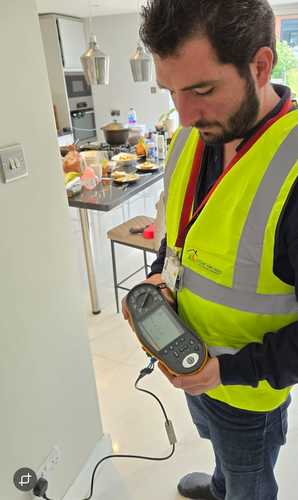
Electrical engineers are warning landlords and tenants to take safety checks seriously after inspections revealed that one in four rental properties in London contains potentially dangerous electrical faults.

According to engineers at Efficient Home Energy UK, which carries out electrical safety inspections across London, a significant number of rental properties fail their Electrical Installation Condition Report (EICR) due to issues that could pose a risk to occupants.

Common problems discovered during inspections include damaged wiring, overloaded consumer units, missing earthing protection, and outdated fuse boxes that no longer meet modern safety standards.

“Many landlords assume if the lights work and sockets turn on, the electrical system must be safe,” Ethem, an engineer at Efficient Home Energy told That's Business.

“However, customers are unaware of preventative measures that can be easily taken to prevent this. Installing a RCD unit or a new fuse box can mitigate risks substantially.”

Electrical safety regulations introduced in recent years require landlords in England to have a valid EICR carried out at least every five years, ensuring that electrical installations meet safety standards. Despite this, engineers say many properties still fail their inspections due to ageing wiring or DIY electrical work carried out by unqualified individuals.

Among the most common issues found during inspections are:

• Lack of RCD protection (residual current devices)

Black and red cabling (indicating a very old type of wiring)

• Damaged or deteriorating wires

• Old MCBs (miniature circuit breakers)

• Unsafe consumer units or outdated fuse boxes

• Missing bonding or earthing protection

Electrical faults remain a leading cause of house fires in the UK, with engineers urging landlords to treat electrical inspections as a crucial safety measure rather than a formality.

“An EICR is designed to identify hidden risks before they become serious problems,” the spokesperson added. “Carrying out regular inspections helps protect tenants and ensures landlords remain compliant with current safety regulations.”

Tenants are also encouraged to report signs of electrical issues to landlords or property managers. Warning signs can include flickering lights, burning smells near sockets, frequently tripping circuit breakers, or discoloured plug outlets.

Landlords who fail to comply with electrical safety regulations can face enforcement action and fines of up to £30,000 from local authorities.

Further guidance on electrical safety inspections and landlord responsibilities can be found at https://efficienthomeenergy.uk.

Tuesday, 24 February 2026

Mould Remediation Goes Digital: UKAME Launches Online Membership Platform with Industry-First Verification Badges and AI-Powered Compliance Tools

As Awaab's Law forces landlords to act on damp and mould within days, UKAME launches the mould industry's first fully digital membership platform, featuring verifiable digital badges for trained technicians, an AI tool built on international remediation standards, and ready-to-use health and safety documentation.

The platform gives housing providers a way to instantly verify that the specialist at their door is actually qualified to be there.

The UK Academy of Mould Experts (UKAME) has launched a first-of-its-kind digital membership platform for the mould remediation industry, introducing technology-driven tools designed to professionalise a sector under intense regulatory and public scrutiny.

At its core is a problem that's dogged the industry for years: when a housing association, landlord, or homeowner hires a mould remediation specialist, there has been no quick, reliable way to check whether that person is genuinely trained and competent. 

With Awaab's Law now compelling social landlords to remediate damp and mould within strict timeframes and the Renters' Rights Bill set to extend similar obligations to the private sector — the demand for qualified specialists has surged. But so has the number of untrained operators entering the market.

"The biggest question housing providers ask us is: 'How do I know this contractor is actually qualified?' Until now, there hasn't been a good answer. A PDF certificate in someone's email is easy to fake and impossible to verify at speed. We've built something that solves that problem instantly."

— Tom, Founder, UKAME

Digital verification badges: a first for the industry

The centrepiece of the UKAME platform is a verifiable digital badge system for trained mould remediation technicians. Each badge is linked to the individual's training record and membership status, and can be checked in real time by anyone, a housing association procurement officer, a landlord, or a member of the public. If a technician's training has lapsed or their membership is inactive, the badge reflects that immediately.

This addresses a critical gap in the current market. While other training bodies issue certificates, those certificates are static documents with no live verification. UKAME's digital badge is dynamic: it confirms not just that someone was trained at some point in the past, but that they are currently a member in good standing with up-to-date qualifications. 

For housing providers operating under the tight deadlines of Awaab's Law, this instant verification removes a significant layer of risk from their contractor selection process.

AI-powered compliance tool built on international standards

The platform also features an AI-powered tool that allows members to query technical questions drawn from the IICRC S520 Standard for Professional Mold Remediation, the globally recognised benchmark for the sector. The tool provides practitioners with on-demand access to guidance on containment procedures, PPE requirements, spore behaviour, moisture mapping protocols, and remediation methodology, grounded in the science rather than guesswork.

For an industry where there are currently no UK-specific mould remediation guidelines or acceptable exposure limits, this represents a significant step forward. Practitioners working on site can access authoritative, standards-based answers in seconds, whether they need to confirm a containment protocol mid-job or check the correct approach for a category of water damage they haven't encountered before.

"There are no UK-specific standards for mould remediation. The IICRC S520 is the closest thing the global industry has to a rulebook, but it's a dense technical document that most practitioners don't have to hand. Our AI tool puts that knowledge in every member's pocket. It doesn't replace training, it reinforces it, every day on site," Tom, Founder, UKAME told That's Business.

Health and safety resources that close the compliance gap

Beyond training and verification, the platform equips members with practical health and safety documentation including RAMS (Risk Assessment and Method Statements) templates, COSHH assessment guidance, and other compliance resources specifically tailored to mould remediation work. 

Mould species appear on the HSE's Approved List of Biological Agents as Hazard Group 2 human pathogens, meaning remediation work carries genuine health risks that require proper documentation and controls, yet many operators in the market currently work without adequate RAMS in place.

For corporate members operating remediation teams, the platform provides a centralised way to manage training records, ensure team members maintain current qualifications, and access the documentation needed to demonstrate compliance to housing providers and insurers.

Why now?: the regulatory moment

The platform launches during a period of unprecedented regulatory change for the UK housing sector. Awaab's Law, which came into force in October 2025, requires social landlords to investigate damp and mould hazards within 10 working days and complete remediation within five.

The legislation was introduced following the death of two-year-old Awaab Ishak from prolonged mould exposure in his Rochdale home. 

Phase two of the law in 2026 will expand to cover additional hazards, and the Renters' Rights Bill will extend equivalent protections to private tenants.

The scale of the challenge is vast. Government data suggests up to 6.5 million UK households are affected by damp and mould. 

A 2025 Health Equals survey found that 28% of people across the UK report living in homes with damp, mould, or cold. 

The Housing Ombudsman received over 16,000 complaints about damp and mould between 2019 and 2024, with the issue now representing half of all casework. 

For housing providers facing this volume of demand, having a digital tool to instantly verify contractor competence is not a luxury, it's rapidly becoming a necessity.

"We're not just offering a membership card. We're giving the industry digital infrastructure it's never had — live verification, AI-powered standards guidance, and the health and safety documentation that should be non-negotiable for anyone working with Hazard Group 2 biological agents. Every other serious trade has moved in this direction. It's time mould remediation caught up."

What the membership includes

UKAME membership is available in two tiers. Individual Membership is designed for sole practitioners and employed technicians, and provides access to the digital badge, AI compliance tool, RAMS templates and health and safety resources, discounted CPD training rates (including 50% off refresher courses), and listing in the UKAME professional directory. 

Corporate Membership, aimed at companies with remediation teams, adds 25% off all training across the team, centralised training record management, and enhanced directory visibility. Both tiers include quarterly member communications with regulatory updates and industry guidance.

Membership is open now at mouldexperts.org.uk.

Tuesday, 14 February 2012

Endsleigh Insurance offers advice to landlords to avoid burst pipes

The current cold weather has led to problems for landlords with unoccupied vacant properties. As the thaw sets in Endsleigh Insurance is advising landlords to take precautions against water damage caused by leaking pipes and frost damaged water tanks.

Alex Stutchbury of Endsleigh Insurance explains; “The problem is the recent deep chill on the back of the already cold seasonal weather. As temperatures start to rise again and frozen pipework thaws out, any damage caused will start to leak. If the leak isn’t found quickly it can easily lead to significant damage, and in an unoccupied property it’s not inconceivable that a leak could go unnoticed for several days or longer.”

Endsleigh offers insurance policies for landlords that include cover for periods when their property is unoccupied. However, it claims that not all policies offered to landlords offer the kind of cover for unoccupied properties that the current cold weather demands, and the same issue applies to private householders whose homes are currently unoccupied.

As a result the company has issued some advice to help protect empty residential properties and ensure that appropriate insurance cover is in place.

Unoccupied & Vacant Homes - 7 ways to protect your property

1. Watch out for ‘Flee Cover’
When insuring a property that is vacant you may hear the term Flee Cover. This means that the insurer has decided to give you a minimal cover while the house being unoccupied. The policy is usually limited and covers damage for fire, lightning and explosion. Many owners of unoccupied properties will therefore find they are NOT covered for water damage or vandalism.

2. Keep the heating on
During this cold weather it is essential that central heating is kept on at a low level to avoid water freezing in pipes. Endsleigh recommends setting thermostats to 13 degrees centigrade and running the system for a few hours at night and again during the day.

3. Clear your gutters
Make sure gutters are clear from any obstruction as this will avoid damp and water penetration problems. It will also make guttering last longer and help you find and repair broken gutters, down pipes and brackets.

4. Invest in decent locks
This will help reduce insurance premiums and make it easier to find the full cover against burglary and vandalism that your property needs. Five lever mortise deadlocks and window locks on all accessible windows is recommended by most insurers.

5. Check the property regularly
Regular visits will deter criminals who may be watching the property, and will also mean that you find leaks, break-ins, vandalism and other damage before the problem escalates. Also remember that most insurers have terms on their policies requiring this.

6. Keep in touch with neighbours
As you neighbours to keep an eye on the property and make sure they have your contact details. Do your bit by maintaining the property’s appearance, for example cutting the grass, clearing rubbish. Your neighbours might be able to contact you in event of emergency, especially if a problem occurs at night.

7. Regularly check and update your insurance policy
Make sure you have adequate insurance and that your policy is up to date. Always insure your property with a cover adequate for the time it is unoccupied, and remember that most standard insurers only cover between 30 and 60 days ‘unoccupancy’.

Specialist insurers can offer covers for all major risks, protecting you properly in case of the worst happens. When arranging your insurance, make sure you check all the cover options available to you. Saving a few pounds on insurance premiums by taking minimal cover could end up costing you dear this winter.

FACTFILE:
Endsleigh is an independent intermediary specialising in the provision of insurance and financial products for career people.

The team have access to the leading insurers and lenders in the UK market, offering comprehensive advice on all areas of financial planning. Along with offering advice on financial protection, investments and retirement planning, Endsleigh also has dedicated mortgage and corporate advisers.

For information on unoccupied property insurance http://www.endsleigh.co.uk/Home/Pages/unoccupied-property-in...
Endsleigh Insurance on Twitter http://www.twitter.com/Endsleigh
Endsleigh on Facebook http://www.facebook.com/endsleigh

Wednesday, 11 January 2012

Landlord Action Comment On New Law To Make Sub-Letting Council Houses A Criminal Offence

Paul Shamplina, founder of Landlord Action, a company specialising in tenant eviction, comments on the latest Government proposal to make sub-letting council houses a criminal offence, with offenders facing up to two years in prison.

Paul comments, "This is an extremely positive step in combating long-term abuse of the social housing system. There have been a growing number of tenants acting as landlords by sub-letting their council properties for their own financial gain and this is to the detriment of thousands of other vulnerable people. In the past, we have experienced "landlords" seeking our assistance to evict their tenant, only to find out that the property is not in fact theirs and the end tenant is not actually aware the property is being illegally sub-let.

"There is a severe shortage of social housing in this country but if enforcement is carried out as a result of this law change, then hopefully this will go some way to freeing up council properties for those who are truly in need. Of course, councils being made aware of such cases and having the ability to throw resources at the investigation process in order to enforce this law will be key to combating the issue.

"Hopefully, imprisonment of up to two years as well as a hefty fine will act as a deterrent to those greedy "wannabe landlords" who continue to flout the system."