Showing posts with label construction. Show all posts

Sunday, 26 April 2026

Stop Pricing the Wrong Jobs: How AI Is Helping Builders Bid Smarter

For many UK construction firms, tendering can feel a bit like buying a lottery ticket, except each ticket costs dozens of hours and a small fortune in staff time.

Now, Gurler Mae Group is hoping to change that with the launch of ConstructionKit, a new AI-powered pre-tender intelligence platform designed to help contractors work out whether a job's actually worth bidding for before they sink time into pricing it.

And frankly, it sounds like something the industry has needed for years.

ConstructionKit pulls together data from 417 local planning authority portals, alongside sources like Contracts Finder, Find a Tender, DEFRA ecology databases, Environment Agency flood risk records, and Historic England records.

In simple terms, it gives estimators and quantity surveyors a much clearer picture of a project before they even open the drawings.

Instead of blindly diving into a bid, the platform uses AI to assess commercial construction projects across England for risk, ecology concerns, funding visibility, and likely margin sensitivity.

That means contractors can quickly spot red flags early, before they’ve burned 60 hours of senior estimator time on something that was never likely to be profitable in the first place.

And that matters.

Industry figures suggest the average competitive tender win rate for UK contractors sits somewhere between one in eight and one in twelve. That is a lot of lost time, especially for SME contractors with turnovers between £2 million and £20 million, where every estimating hour counts.

Emre Gurler, founder of Gurler Mae Group and ConstructionKit, puts it bluntly.

He told That's Business: “The construction industry has had access to project data for years. But data alone does not solve the problem. Contractors do not need more projects to look at. They need to know which ones are worth bidding on.”

That’s the real issue.

More leads aren't the answer. Better decisions are.

ConstructionKit’s own analysis of over 310 commercial projects found only 41% had full planning consent, clean ecology surveys, and a clearly identifiable funding source.

The other 59%? Packed with risks many firms only uncover after they’ve already committed serious estimating resources.

That's not inefficiency, that's expensive guesswork.

The platform is available on subscription, starting from £199 per month, with a Commercial Founding Member rate of £349 per month.

Alongside the paid platform, the company has also launched three free resources for the sector: a Pre-Tender Bid Qualification Checklist, a monthly UK Pre-Tender Intelligence Report, and the Construction Scoreboard, a free diagnostic tool designed to help firms identify their biggest commercial bottleneck.

In a sector where margins are tight and wasted time is expensive, bidding smarter may be far more valuable than simply bidding more.

To learn more visit getconstructionkit.com.

Tuesday, 31 March 2026

CIBSE Technical Symposium 2026 explores the future of buildings fit for 2050

The CIBSE Technical Symposium 2026, one of CIBSE’s flagship events, took place at Loughborough University on 26–27 March, uniting top industry experts, academics, policymakers and practitioners to explore how the built environment can be reshaped to prioritise wellbeing, inclusivity and sustainable performance.

Under the theme “Fit for 2050 – Redesigning Spaces for Wellbeing, Inclusivity, and Sustainable Performance”, the two-day Symposium provided a dynamic platform for sharing cutting-edge research, practical insights and bold ideas that will shape the next generation of building services engineering.

The Symposium covered a wide range of topics critical to the future of the built environment, including indoor air quality, ventilation, thermal performance, overheating mitigation, energy-efficient retrofits, circularity in design, net zero pathways, AI and machine learning applications and the evolving role of engineers in an increasingly data-driven industry.

The two-day event reinforced the importance of interdisciplinary collaboration, innovation, and a shift from compliance-driven design to performance-led, people-focused outcomes, highlighting the critical steps needed to prepare buildings and communities for a sustainable, resilient and inclusive future.

To see how the Symposium unfolded and explore the key highlights please visit https://www.cibse.org/policy-advocacy/news/cibse-technical-symposium-2026-explored-the-future-of-buildings-fit-for-2050

Friday, 6 March 2026

Performance in practice took centre stage at CIBSE Building Performance Awards 2026

CIBSE has announced the winners of the CIBSE Building Performance Awards 2026, which took place on 5 March 2026 at the Park Plaza Westminster Bridge in London.

Hosted by comedian Maisie Adam, the annual flagship CIBSE event has once more brought together leaders from across the built environment to recognise projects, products and professionals delivering measurable building performance outcomes and advancing excellence in building services engineering.

The CIBSE Building Performance Awards celebrate evidence-based performance, rewarding those who demonstrate a commitment to closing the performance gap and delivering buildings that work in practice, for people and for the planet.

Dr Julie Godefroy, Chair of the Judges and Head of Net Zero at CIBSE, told That's Business: “The CIBSE Building Performance Awards have long promoted a focus on how buildings actually work, for people and for the environment. 

"I'm delighted that they have kept growing, with a record number of entries to the 2026 edition. This year saw the introduction of dedicated categories to reward Building Performance Evaluation, which attracted huge interest, reflecting the range of products and services now on offer in this field. 

"Across all categories we've seen a wide spread of entries, from individuals to large organisations, from small projects to portfolios, new builds to retrofits and FM projects, and from across the world. Thank you and well done to everyone for their continued work in driving engineering excellence.”

The awards ceremony concluded with a renewed call for the industry to continue prioritising building performance as a central pillar in achieving net zero and creating healthier, more resilient buildings.

For more details and the full list of winners visit https://www.cibse.org

Monday, 9 February 2026

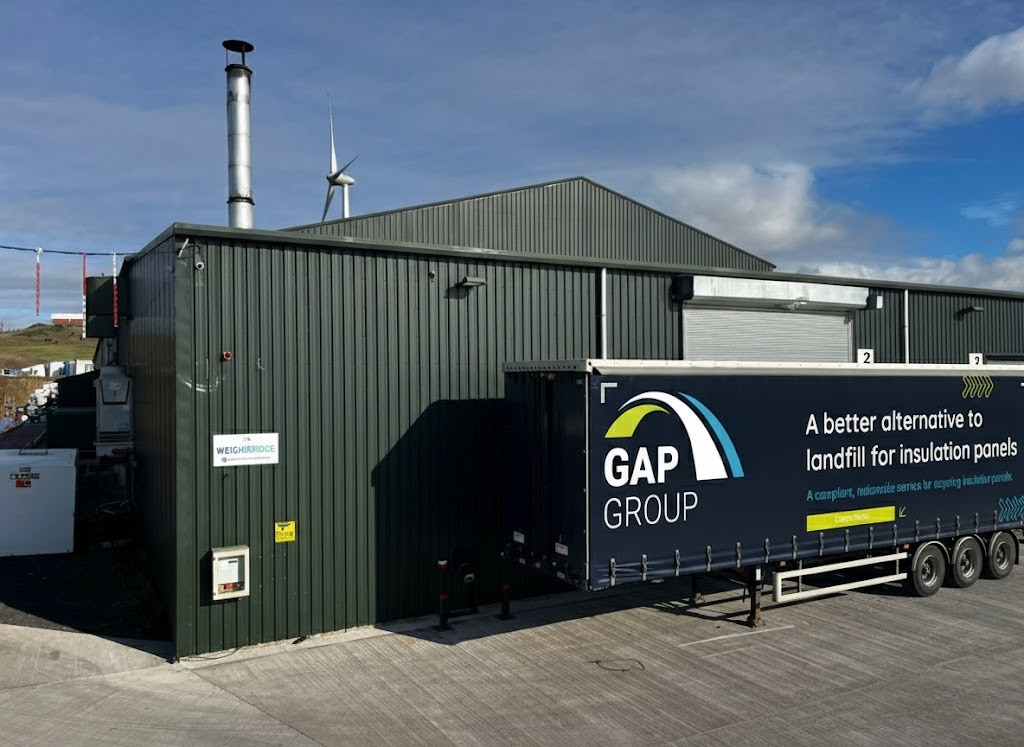
GAP Group North East launches UK‑wide insulation panel recycling to tackle construction’s hidden waste and pollution problem

A North East–founded recycling business has launched a UK‑wide insulation panel recycling service to tackle one of construction’s most overlooked environmental problems: what happens to insulation at end of life. 

Construction is responsible for around 62% of all waste generated in the UK and roughly a third of everything sent to landfill, despite national targets to drive that figure close to zero.

Insulation is essential for cutting operational carbon in buildings, but once removed from a roof, façade or cold store it is still too often treated as disposable. 

In practice, that means composite and foam‑cored panels going into mixed skips, then into landfill, shredding or low‑grade incineration routes, where they can persist for centuries, releasing microplastics or releasing trapped blowing agents, harmful gasses and other pollutants.​

GAP Group North East’s new service gives contractors and facilities managers a compliant, direct‑to‑processor route for end‑of‑life insulation panels, helping to divert complex materials away from landfill and uncontrolled disposal. 

Panels collected from projects across the UK are processed through GAP Group’s specialist fridge‑recycling lines in Gateshead and Perth, where metal skins and insulation cores are separated and the gasses removed so that recyclable fractions can be recovered and hazardous components handled under strict environmental controls.

The environmental stakes are high. Older insulated panels – especially legacy cold‑room and composite units – can contain foams blown with ozone‑depleting substances or high‑global‑warming‑potential gases, which regulations say must be captured and treated rather than simply released during shredding, burning or uncontrolled disposal. 

At the same time, plastic‑foam cores such as EPS and other petrochemical‑based materials do not biodegrade and can break down into persistent microplastics that spread through soil and water, adding to the wider plastic pollution crisis.

Peter Moody, CEO at GAP Group North East, told That's Business: “Insulation has helped cut energy use in buildings, but if we just dump the panels at end of life, we are swapping one environmental problem for another.” 

Moody added “By putting insulated panels through the same kind of highly regulated lines we use for fridges, we can recover metals, control and capture blowing agents, and stop these materials ending up as uncontrolled pollution or long‑term landfill burden. That means a real reduction in embodied carbon and environmental risk for our customers’ projects.”

By routing waste panels through its established plants, GAP Group North East can:

Separate and recycle metal facings, reducing the need for virgin metal production and cutting associated carbon emissions.

Treat foam cores and blowing agents in line with ozone‑depleting substance and climate regulations, rather than allowing gases to escape during demolition, burning or landfill.

Provide a clear audit trail so contractors can evidence responsible management of one of their more complex waste streams and demonstrate progress against ESG and net‑zero commitments.

The new insulation panel service sits alongside GAP Group’s wider multi‑stream offer – including fridges, small WEEE, vapes, batteries, displays and more – enabling construction and FM customers to consolidate difficult, compliance‑sensitive waste streams with a single national recycler.

 For a sector under pressure to cut waste to landfill from 13% of total arisings towards a 1% target, services that unlock higher‑value recovery from “forgotten” fractions such as insulation panels are becoming a critical part of credible sustainability strategies.

GAP Group North East is a direct‑to‑processor specialist recycler handling a wide range of electrical and specialist waste streams, including fridges, small WEEE, vapes, batteries, lighting, cables and insulation panels. 

Founded in the North East of England but operating UK‑wide, the company runs processing facilities in Gateshead and Perth and provides fast, compliant national collections, detailed reporting and strong ESG support for business customers.

Wednesday, 15 January 2025

Why British Manufacturing Matters: Building a Stronger Economy from the Ground Up

If you run your own business, or are in construction, you've probably noticed how much has changed over the years. 

More and more products coming in from overseas, fewer local suppliers, and prices that seem to go up every time there's a hiccup in global shipping. 

It's time we talked about why bringing manufacturing back to Britain isn't merely good sense – it's essential for our future, too.

The Real Cost of Buying from Abroad?

Let's be straight about this - every time we choose an imported product over a British-made one, we're not just sending money overseas. We're:

- Losing jobs that could be supporting local families

- Missing out on tax revenue that could be improving our roads and hospitals

- Weakening our ability to make things for ourselves

- Watching our skilled workforce shrink

- Helping other countries build their economies instead of our own

Why Local Manufacturing Makes Sense

Take IBRAN, for example. They're making construction products right here in Britain, sourcing everything they need within 20 miles of their factory. Think about what that means:

- Materials come from local suppliers

- Local hauliers move the goods

- Local workers earn good wages

- Local businesses get regular work

- Local councils get their business rates

Every pound spent with them circulates about two and a half times in our economy. That's money staying in our communities, supporting our families, and building our future.

Your Tax Money at Work - Here, Not There

When you buy British-made products, you're not just getting quality goods. You're making sure:

- Workers and employers pay National Insurance that funds our NHS

- Income tax stays in Britain to pay for our schools and services

- VAT supports our economy, not someone else's

- Business rates help keep our local councils running

- Corporation tax builds British infrastructure

Think about it - why should our tax money be supporting other countries' public services when we need it right here?

Supporting British Jobs and Skills

Every British manufacturing job supports:

- Skilled workers who spend their wages locally

- Apprenticeships for young people

- Training opportunities for the workforce

- Regular work for local suppliers

- Growth in related industries like transport and maintenance

The IBRAN Example: Keeping It Local, Keeping It Smart

IBRAN shows how modern British manufacturing can work. By keeping their entire supply chain within 20 miles, they're:

- Cutting down on transport costs and emissions

- Supporting other local businesses

- Keeping quality control tight

- Creating local jobs

- Building strong relationships with suppliers

When you need their products, you're not waiting for a container from halfway around the world. They're right here, making what you need.

Better for the Environment, Better for Business

Local manufacturing isn't just about the economy - it makes environmental sense too:

- Shorter delivery distances mean lower emissions

- Better control over materials and processes

- Less packaging needed

- Easier to recycle and reuse materials

- Quicker response to problems or changes

Getting Britain Building Again

We've spent decades watching our manufacturing base shrink while importing more and more. The result? Lower productivity, fewer skilled jobs, and less control over our own economy. It's time to turn that around.

When you choose British-made products:

- You're supporting British jobs

- You're investing in British skills

- You're building British communities

- You're strengthening our economy

- You're securing our future

What This Means for Your Business

If you're running a construction business or working on site, choosing British-made products means:

- Reliable supply chains

- Quicker deliveries

- Better technical support

- Easier returns if needed

- Supporting other British businesses

Looking Ahead

The future of British construction needs a strong manufacturing base. We need:

- More companies making products here

- More support for local supply chains

- More investment in British skills

- More focus on quality and innovation

- More pride in British-made products

Making the Right Choice

Every time you choose a supplier, you're making a choice about Britain's future. By choosing British manufacturers like IBRAN, you're:

- Supporting British jobs

- Keeping money in our economy

- Building stronger communities

- Reducing environmental impact

- Investing in Britain's future

The Bottom Line

It's simple really - when we make things in Britain, we all benefit. From the workers on the factory floor to the drivers delivering materials, from the local cafes feeding the workforce to the councils receiving business rates - everyone gets a share of the success.

British manufacturing isn't just about making products - it's about building a stronger, more resilient economy that works for all of us. The choice is yours: support British manufacturing and watch our communities grow stronger, or watch our economic strength continue to slip away overseas.

The next time you're sourcing materials or products, think about where they're made. Choose British, choose local, choose smart.

https://www.ibran.com

Monday, 4 March 2024

Filling the Construction Skills Gap: What’s Holding Women Back?

Women in Construction Week (3 - 9 March 2024) celebrates the achievements of women in the construction industry, highlighting their contributions, confronting the challenges they face and inspiring future generations of women.

While there's been significant progress in recent years, there's still a fairy distance to go to reach equality in the industry. To highlight this, 3B Training has released an infographic, which illustrates how far women have come and where there's still room for improvement.

The infographic shows in 2023, the UK construction force was 15.8% female with over 340,000 women working in the industry. A 3.2% increase since before the pandemic occurred.  

Despite this increase, the ratio of women to men is still massively disproportionate.

For Women in Construction Week, 3B Training interviewed Pamela Evans, founder of Diggerlady to reflect on her experiences of being a woman in the construction industry.

“In school I was told I couldn’t be a digger driver, that it's a man’s job and I was signposted to different career options like care work.” 

Fortunately, Pamela didn’t let this deter her from continuing her passion and aged just 21, she became not only the first female in the country to get the 360º Tracked Excavator licence, she was also the youngest person ever to obtain this licence. 

These old fashioned attitudes and gender stereotyping aren’t the only reason why so few women are looking to join the industry. The lack of awareness around opportunities for women in construction is another major factor.

A Women into Construction (WIC) survey of 16-25 year olds learned only 13% of women would even  consider a career in the construction industry.

 29% of women thought construction meant onsite work only, and 45% later said they would be more interested in a career in construction after learning about the diverse roles available for women in construction industry management.

In an interview with 3B Training, Charlene Wade, Project Manager at Equans said: “The opportunities in construction aren't all labour based. Some of the skills women already have are transferable into the construction industry. So if you’re an admin or in any kind of leadership or management role, you can use that in the construction industry, too.”

On a more positive note, the top three reasons why women find the construction industry appealing include the:

Potential high salary

Opportunity for a long term career

Ability to set up their own business in the future

“Starting my own business was the best thing I ever did and I encourage other women to start their own business in trades.” said Pamela.

However, Pamela’s journey wasn't always smooth-sailing…

“Sometimes I'd be the only woman on a site with up to 100 men. Some were supportive, some didn’t bat an eyelid, but there were always some men who couldn’t stand the fact I was there in a ‘male’ industry. I was often told I shouldn't be there, I shouldn't be taking a ‘man’s job’. It was hard to hear but it spurred me on to prove I was in the right place and that I was doing the right job.”

Unfortunately, Pamela isn’t alone when it comes to facing discrimination as a woman in the construction industry. An alarming 72% of women in the construction industry experienced gender discrimination in the workplace, with 41% receiving inappropriate comments from male colleagues and 26% reporting they believed they were left out or excluded.

Discrimination is just one of the reasons why women have left the industry. Other factors include:

Unequal growth opportunities compared to men

Lack of access to a women’s toilet

Unequal pay (A study by Rated People found women are paid just 72% of men’s average pay for trade roles).

Inflexibility. Which can be difficult for women who have children.

So how can we address these issues that are keeping women from filling the skills gap?

When asked this question, 47% said a change to the male dominated culture would be the number one change required.

1 in 10 women said better childcare options would be the top change in persuading them to join or stay in the construction industry.

Other factors that help women to stay in the industry include:

Equal pay

Equal growth/training opportunities

Flexible working hours

Charlene Wade offers the following advice to women who are looking to join construction:

“Start doing your research online, then begin going to events and seminars to put yourself out there. There are schemes to assist women to join firms. Ensure you work in a firm whose values align with yours.”

Pamela’s advice?

“Speak to other women who work in the construction industry. Get in touch with the Register of Tradeswomen (https://registeroftradeswomen.com), attend women in trades events. Don’t be deterred by being in a minority, it’s the only way we can make the necessary changes. Women’s skills are needed.”

You can watch the full interviews with Charlene Wade and ‘The Digger Lady’ Pamela Evans on the 3B Training YouTube channel https://www.youtube.com/@3btraining

FACTFILE: A leading UK-based organisation, 3B Training offers premier health and safety accredited courses online, in-house, and across various training venues nationwide. Courses are backed by esteemed accreditations, including CITB, IOSH, and NEBOSH, among others.

Website: https://www.3btraining.com

Wednesday, 27 December 2023

BMBI, the barometer of sales to builders and trades, expands to 92% market coverage

The year 2023 is rounding off with a significant relaunch of the Builders Merchant Building Index (BMBI) report, now featuring builders’ merchants sales data to builders and trades people covering 92% of GB national sales, up from just over 80%.

Launched in 2015 as a brand of the Builders Merchants Federation (BMF), BMBI uses data from GfK’s ground-breaking Builders Merchants Panel, The panel captures generalist builders’ merchants’ sales throughout Great Britain to builders and trades people who are directly involved in repairing, maintaining, and improving Britain’s 27.7 million homes. 

The recent addition to the panel of Huws Gray, JT Dove and CMO Stores, mean the data now tracks the sales of 92% of builders’ merchant branches making it the most accurate, comprehensive monitor of market performance available.

The monthly BMBI report is well used by merchants, their larger customers and suppliers and is used by construction generally. It's also caught the attention of companies and organisations outside the construction industry, who want to know what’s happening, what’s important and why. The why is provided by leading brands of building materials, components and software, the BMBI Experts, who make sense of the trends and issues for readers.

The website is regularly visited by economists and advisors, the national media, big banks, big six accountants, management consultants, private equity investors, financial institutions and Government departments. Anyone in fact who needs to know the trends and what's driving the trends in a complicated, fragmented industry.

Across the pond, readership is growing rapidly, and the BMBI website gets regular hits from the US Senate, US State Department, individual senators, and the Bill & Melinda Gates Foundation to name only a few.

“Since its inception in 2014 GfK’s Builders Merchants leaderpanel has become a key market barometer through its usage in the BMBI,” says Emile van der Ryst, Key Account Manager – Trade & DIY at GfK – an NiQ company. “It’s become a reference point for industry leaders, financial institutions, and government organisations.

“After a relaunch of the data in 2020 we're now pleased to announce the latest relaunch, which came into effect with the October 2023 dataset. The key missing market contributor, Huws Gray, is now included for the first time alongside CMO Stores and JT Dove, both well-known market players.

“This is an exciting new chapter for the service which we believe is a crucial and vital step in providing a relevant and important view of the market, especially in these challenging economic conditions.”

Mike Rigby, MD of MRA Research which produces the BMBI report says: “Once you track over 90% of builders’ merchants’ sales of building materials to builders and tradespeople the numbers are, practically speaking, the market itself, not an estimate or approximation of it. That’s a crucial distinction. It’s not like a survey or poll which takes only a small slice of the market, which is intended to represent the market, and then scales it up. However sound your sampling and rigorous your methodology, there’s a world of difference between scaling up from a small sample, and reporting on 92% of actual sales to the market.”

“The relaunch in the October BMBI report,” confirms BMF CEO John Newcomb, “is a significant step forward in establishing reliable statistics across construction. The BMF’s Builders Merchant Building Index (BMBI) is the closest measure there is of Britain’s small builder and trades market, and the best proxy we have to the important residential RMI (Repair, Maintain, and Improve) market.

“BMBI is as accurate a measure of the market as it’s possible to get. That’s one reason we call GfK’s Builders Merchants leaderpanel, ‘gold standard’ data. And it’s why so many decision makers and influencers regularly spend so much time poring over the reports and video debates from the BMBI Experts on www.bmbi.co.uk.”

Monday, 13 February 2012

Deanston Cooper Launches New Website Promoting Job Opportunities In The Construction, Renewable Energy and Environmental Sectors

Deanston Cooper Limited has launched its new specialist website (www.deanstoncooper.com) which caters for candidates and clients in the following sectors – Construction Jobs, Renewable Energy Jobs and Environmental Jobs.

The website has been designed to complement the extensive range of career management and recruitment services which Deanston Cooper currently offer and should prove to be a comprehensive point of reference for clients and candidates. It is highly informative with an easy to navigate format which ensures that every visitor can find what they want quickly and easily.

From a candidates perspective the site is designed to be user friendly and intuitive in use. It benefits from a custom built “Smart Job Search” function which allows candidates to find the exact type of vacancy that they are looking for. They can also register their interest to be contacted by a Consultant who will put together an individual recruitment plan which will allow them to achieve their career goals. Deanston Cooper’s Consultants are all experts in their chosen sectors and pride themselves in being able to use their vast network of contacts to place candidates in many unadvertised off market positions.

The site has an in depth Career Toolkit full of relevant information in relation to Writing a CV, Interview Skills, Presentation Skills and Career Planning. It is also fully integrated with social media such as LinkedIn, Twitter and Facebook allowing friends to easily share jobs which may be of interest.

From a recruiters perspective the most unique aspect of the site is the ability to post vacancies free of charge with applications being emailed directly to their inbox. In order to give clients a wider potential audience for job postings, the new website has also developed a talent finder network in partnership with some of the most popular and best known generalist job boards. This talent finder network means that when a job is posted on the website it will also automatically be posted onto a number of other job boards and social media platforms including Facebook, Indeed, LinkedIn, Workhound and Twitter. Deanston Cooper believes that the cost free feature will prove to be an invaluable tool for clients in light of the current financial climate.

Company Russell McCaig said: "The development of the new website which caters specifically for job opportunities in the construction, renewable energy and environmental sectors was primarily driven by feedback from candidates and clients.

"They specified their desire for a specialist site that catered for their exact employment and career requirements. Indeed, we worked with a number of them throughout the development process to ensure that the finished website was to the standard that they required. The initial feedback has been extremely positive in terms of the websites content, functionality and ease of use. From Deanston Cooper’s perspective it gave us a great opportunity to increase our profile whilst helping to stimulate the stagnant UK recruitment market by attracting more suitably experienced candidates for our clients and promoting more relevant job opportunities to our candidates."

Construction Jobs
The Construction Jobs area of the site
(http://www.deanstoncooper.com/sectors/construction-jobs) is wholly devoted to recruitment in the construction sector. Deanston Cooper specialises in construction recruitment providing the latest building jobs, civil engineering jobs, surveying jobs, water jobs, site manager jobs, structural engineering jobs and CAD jobs.

Environmental Jobs
The Environmental Jobs area of the site (http://www.deanstoncooper.com/sectors/environment-jobs) is wholly devoted to recruitment in the environmental sector. Deanston Cooper specialises in environmental recruitment providing the latest ecology jobs, planning jobs, environmental impact assessment jobs, earth science jobs, GIS jobs, geotechnical jobs and landscape architecture jobs.

Renewable Energy Jobs
The Renewable Energy Jobs area of the site (http://www.deanstoncooper.com/sectors/renewable-energy-jobs) is wholly devoted to recruitment in the construction sector. Deanston Cooper specialises in renewable energy recruitment providing the latest wind jobs, hydro jobs, wave jobs, offshore wind jobs, tidal jobs, solar jobs, biomass jobs and energy from waste jobs.

FACTFILE:
Deanston Cooper is a market leading consultancy providing recruitment and career management services to the Construction, Renewable Energy and Environmental sectors throughout the UK.

The company was started through a strong belief that even in today’s overcrowded marketplace there was an opportunity for a different type of consultancy. One that operates with honesty and integrity, whilst having the knowledge, skills and credibility to guarantee success. For clients this means being able to attract, recruit, retain and develop the best possible talent. For candidates it’s making sure their next career move is the right move.

The company’s Mission Statement is quite simply:  “Determined to be different”

Website: www.deanstoncooper.com

Thursday, 22 September 2011

Aldermore and Hitachi Capital extend a further helping hand to hard-pressed house buyers

New British bank Aldermore is once again extending a helping hand to hard-pressed house buyers via the launch of a new scheme which requires borrowers to raise only a 5% cash deposit.

The scheme, initially marketed via Barratt Homes (including David Wilson Homes and Ward Homes), combines an Aldermore 80% LTV two-year fixed rate mortgage with up to a 15% LTV unsecured loan provided by Hitachi Capital (UK) PLC to cover part of the required deposit. House buyers therefore only have to raise a 5% cash deposit of their own. Further product details are provided in the notes to editors.

Charles Haresnape, Managing Director of Aldermore Residential Mortgages, said: “We are committed to helping struggling home-buyers find solutions to problems which continue to prevent them from owning property of their own.

“The single biggest issue holding back perfectly creditworthy house buyers is their inability to raise a sufficiently large deposit. Aldermore’s recently launched Family Guarantee Mortgage provides an option for borrowers seeking a 100% loan and this scheme gives those who can raise a 5% cash deposit yet another route to home ownership.

“We are providing would-be homeowners with choices, in a market where the options for those with less than a 25% deposit are few and far between.”

Gerald Grimes, Managing Director, Hitachi Capital (UK) PLC, said: “Would-be home buyers have become disheartened with the current housing market because of the large deposits demanded by a lot of lenders. Last year we teamed up with Barratt Homes to offer parents the opportunity to help their children onto the ladder; this year we are opening up this innovative product to the buyers directly. Initially this will be with Barratt Homes but we will be rolling it out through other house builders, such as Linden Homes, part of Galliford Try plc and Keepmoat Homes.

“If the housing market is to fully recover, the issue of deposits needs to be tackled head on. In light of this, I am delighted to be working with Barratt Homes as well as Aldermore to bring a pioneering new product to help stimulate the UK property market”

Earlier this month Aldermore became the first national lender since the onset of the credit crunch to offer a 100% LTV mortgage underpinned by a parental guarantee. Aldermore markets a range of residential and buy-to-let mortgages via regulated intermediaries. Unlike most other lenders, Aldermore’s decision-making is not dependent on credit scoring but is based on sensible underwriting rules and criteria applied by experienced staff.

Full information about Aldermore’s products including rates, criteria and a downloadable product guide, are available at: www.aldermore-mortgages.co.uk or brokers can contact Aldermore on 0333 3211000.