Showing posts with label security. Show all posts

Monday, 7 September 2026

Multi-network SIM technology supports sensitive remote surveillance by private eyes and others

The Covert Group is using KeySIM’s multi-network Internet of Things (IoT) SIM cards to provide reliable connectivity for remotely operated CCTV cameras and surveillance applications during sensitive security deployments.

The company designs and manufactures its own covert cameras, apps and supporting technology for professional investigators, surveillance teams, law enforcement organisations and councils. 

Its equipment can be deployed for both short-term and long-term operations in urban, rural and remote locations.

The Covert Group has worked with KeySIM for four years, and its connected equipment is now used by hundreds of private investigators.

Reliable connectivity is vital during surveillance work. Authorised users must be able to access footage, manage cameras and respond to changing operational requirements without visiting the deployment site.

However, covert cameras are often installed in places where fixed broadband or Wi-Fi is unavailable. Mobile coverage can also vary significantly, making a SIM card tied to a single mobile network unsuitable for many operations.

The Covert Group selected KeySIM’s unsteered multi-network IoT SIM, which can connect through Vodafone, O2, EE and Three in the UK, as well as participating networks overseas. This gives deployed equipment a better opportunity to establish and maintain a mobile connection, even when the strongest network cannot be identified beforehand.

KeySIM’s cards are installed in Teltonika routers connected to The Covert Group’s cameras and applications. Authorised investigators can use the KeySIM VPN and the SIM’s private IP address to access and control the router and associated equipment remotely.

Teltonika routers can also receive SMS commands, providing an alternative way to control or reconfigure equipment if the normal data connection becomes unavailable.

Another important consideration is the possibility that covert equipment may be lost, damaged or discovered during a deployment. KeySIM operates without a minimum contract, enabling The Covert Group to cancel a subscription immediately if a camera or router cannot be recovered.

Vernon Griffiths, founder of The Covert Group, said connectivity was a critical part of the company’s complete surveillance system.

“If equipment loses its connection at the wrong moment, vital footage can be lost or become inaccessible, which can have serious consequences for an investigation,” he explained to That's Business.

Graham Robinson, Managing Director of KeySIM, said the combination of multi-network access, secure VPN connectivity, private IP addresses and SMS control gives investigators several ways to communicate with deployed equipment.

For The Covert Group, bringing together purpose-built cameras, supporting applications and flexible connectivity provides surveillance professionals with a practical system designed for the unpredictable conditions encountered during real-world investigations.


https://www.keysim.co.uk

Tuesday, 24 February 2026

Infinigate UKI and OpenOrigins Partner to bring verifiable media authentication to the UK&I channel

Justin Griffiths
Infinigate UK & Ireland, the value-added distributor specialising in cybersecurity, secure networks and secure cloud has today announced a new vendor partnership with OpenOrigins, a decentralised authentication platform designed to verify the authenticity of digital media and help organisations combat deepfakes and AI-generated content.

The partnership will initially focus on UK & Ireland, enabling Infinigate’s channel community to address an urgent and fast-growing challenge around establishing trust in the images and videos used across their organisation.

Industry analysts expect deepfakes to become mainstream in 2026, with the threat shifting from reputational damage to direct financial gain by criminals. 

As a result, organisations are increasing their investment in deepfake detection technologies, with spending predicted to rise by 40% in 2026 across industries and use cases. (forrester.com)

For channel partners, OpenOrigins opens up a practical, high-value conversation across a broad set of use cases, including:

Corporate communications and brand protection

Fraud prevention and evidential integrity workflows

Media and content production

Identity and trust assurance scenarios where visual proof matters

Ari Abelson, Co-Founder & Chief Strategy Officer at OpenOrigins, told That's Business: “Safeguarding non-synthetic content by establishing provable provenance has become essential to protect businesses from corporate fraud.

"OpenOrigins’ approach overcomes the limitations of AI detectors and other reactive solutions that are no longer able to meet the escalating challenge. Partnering with a cybersecurity specialist such as Infinigate fits perfectly with our intent to build trust and security back into the Internet."

Justin Griffiths, RVP Infinigate UK&I, added: “OpenOrigins brings a smart and absolutely dependable way to protect data integrity at a time when authenticity is becoming a board-level concern. Together, we’ll help our partners take a provenance-led approach to trusted media, backed by the enablement, technical support and route-to-market services they expect from Infinigate, while unlocking new growth opportunities.”

FACTFILE:

The Infinigate Group, the leading technology platform and trusted advisor in Cybersecurity, Cloud & Network Infrastructure sets itself apart for its deep technical expertise, delivering locally tailored solutions and services to SMB and enterprise customers across EMEA and ANZ. Relying on a strong central supply chain and an extensive portfolio of leading-edge solutions, Infinigate sparks growth for vendor and channel partners.

For additional information please visit www.infinigate.com

OpenOrigins is building the trust layer for the internet, giving authentic people and media a permanent, verifiable path in the AI-driven internet. Powered by Cambium, a novel Internet-scale provenance protocol, we enable any digital asset to prove its origin independently of custody, distribution, or storage. This ensures authenticity persists wherever data travels across the digital world. For more information, please visit https://www.openorigins.com.

Tuesday, 13 January 2026

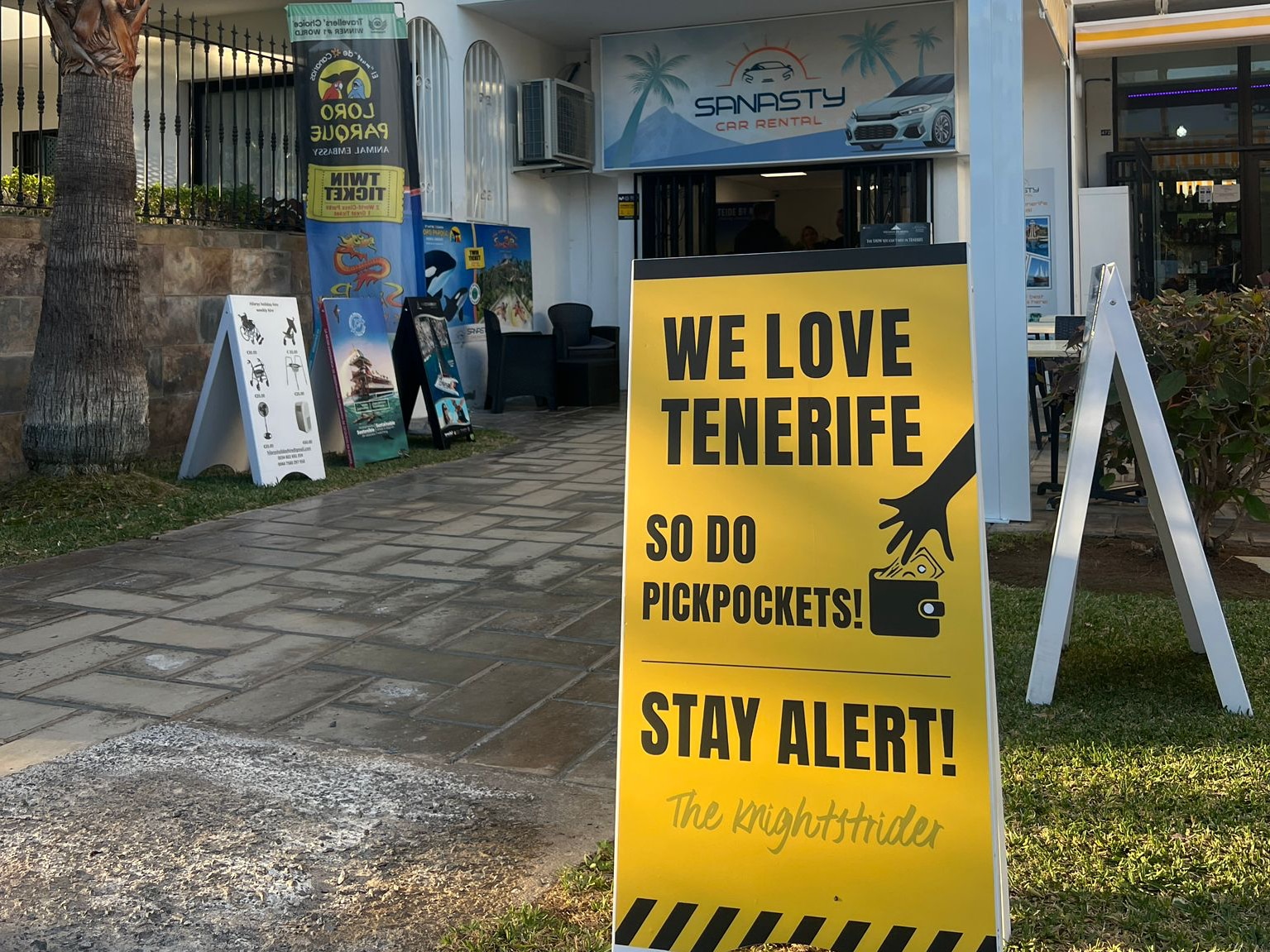
Local business explains ‘stay alert’ sign seen in Tenerife tourist area

A local business owner in Tenerife has explained the purpose of a “stay alert” sign that has recently been shared widely online and referenced in several UK and Spanish news reports.

The sign was placed outside Sanasty Car Rental in Los Cristianos by the company’s owner, Andrew, who lives on the island full-time and works closely with tourists throughout the year. 

He says the message is intended to encourage awareness rather than cause concern, particularly in busy holiday areas where visitors may be more relaxed.

Andrew explained that people on holiday often switch off from their usual routines, which can make them more vulnerable to opportunistic theft — something he says is common in busy tourist destinations across Europe.

“On holiday, people naturally switch off – and that’s exactly when pickpockets take advantage.

I felt it was far better to warn visitors so they can relax and enjoy their holiday safely, rather than be robbed and leave Tenerife with a bad experience they’ll never forget.”

He added the sign was designed and paid for privately and is located outside his own business premises, rather than being an official notice or authority-issued warning. According to Andrew, the aim is simply to prompt a moment of awareness as people pass by, reminding them to keep personal belongings secure while enjoying their stay.

“The island’s popularity is growing every year, and with that comes responsibility. People come into my office daily just to thank us for the warning. It’s important to be honest and protect visitors, not sweep the issue under the rug.”

Andrew has also shared a short video on his YouTube channel showing when the sign was first put in place and explaining the thinking behind it, which he says has helped answer questions from viewers and visitors alike:

Sanasty Car Rental says it regularly offers practical advice to customers on keeping belongings safe while travelling, with the aim of helping visitors enjoy Tenerife and leave with positive memories of the island.

https://sanasty.com

Monday, 14 July 2025

How Retailers Can Protect Their Stock from Young Opportunistic Thieves During the School Holidays

With the school holidays in full swing, many retailers see a noticeable uptick in footfall, especially from teenagers and schoolchildren with time on their hands. 

While most young visitors are simply browsing or enjoying a bit of freedom, the holidays can unfortunately also bring a rise in opportunistic thefts from under-18s.

Retail theft is frustrating at any time, but it’s particularly sensitive when minors are involved. So how can shopkeepers and retail staff protect stock, maintain a welcoming environment, and still act responsibly when tackling the issue?

Here are some practical and ethical strategies to help safeguard your business during the holiday period:

1. Make Your Presence Known

A visible staff presence is one of the strongest deterrents to theft. Ensure team members are actively engaging with all customers, especially in quieter corners of the shop or near high-value goods. A friendly “Can I help you?” does more than offer service, it reminds would-be shoplifters they’re being noticed.

2. Review and Refresh CCTV Coverage

Make sure your CCTV system is:

Fully operational

Covers all key areas (including blind spots and exits)

Clearly signed and visible to visitors

Regular checks and signage reminding customers of surveillance can go a long way in discouraging theft. If your system is outdated, now’s the time to consider upgrading before problems arise.

3. Reposition High-Risk Stock

Items that are small, popular, or easy to conceal, such as cosmetics, accessories, tech items, or confectionery should be:

Kept closer to the tills

Placed behind counters

Displayed in locked or secured cabinets

This also applies to seasonal merchandise or trending products among teens.

4. Train Staff in Friendly Vigilance

Your team doesn’t need to turn into security guards, but they should know the signs of suspicious behaviour, such as:

Groups loitering without engaging with products

People entering with large bags or bulky clothing in warm weather

Repeated glancing around or avoiding eye contact

Encourage calm, non-accusatory interactions. A welcoming approach often disarms bad intentions and avoids escalation.

5. Work With Local Schools and Community Police

In some areas, community policing teams offer additional patrols during the holidays and may be happy to work with retailers. Establish a dialogue and share concerns early.

Likewise, developing a relationship with local schools can be helpful. If there’s a recurring problem involving specific pupils, schools often prefer to be informed discreetly to resolve the issue themselves.

6. Offer Alternatives – Don’t Just Assume the Worst

Sometimes, theft by minors stems from boredom, peer pressure, or financial hardship rather than malice. Consider:

Offering free or low-cost samples

Engaging younger visitors with friendly conversation

Providing a small, affordable ‘pocket money’ range to reduce temptation

It won’t prevent every incident, but a proactive, understanding approach can make a difference.

7. Stay Calm and Follow Procedure

If a theft occurs:

Do not physically confront the suspect unless absolutely necessary

Record CCTV footage

Report serious or repeated incidents to the police

Ensure your team knows what to do, including how to involve parents or guardians appropriately if a minor is involved.

Some Chambers of Commerce or local councils run a radio link system with shopkeepers all linked by radio to a central command point or the local police. If there's no such system in your town or district perhaps you should suggest that one is launched?

8. Don’t Let a Few Spoil It for Everyone

It’s easy to become defensive or suspicious when thefts increase, but remember, most young customers are respectful and often enthusiastic shoppers. Keeping your store friendly and inclusive is key to long-term trust and loyalty.

The school holidays are a brilliant time for shops to attract younger customers and families, but they also call for smart stock management and a bit more vigilance. 

With the right balance of security, staff training, and community cooperation, retailers can protect their stock while still creating a welcoming environment for all.

After all, today’s teens could become tomorrow’s most loyal customers — if they’re treated with fairness and respect.

Wednesday, 22 January 2025

Trades United to Lead Second Van Rally in Westminster to Combat Tool Theft

Date: Monday, 3rd February 2025

Location: Brent Cross to Parliament Square, Westminster

Time: Starting at 11:00 AM, arriving at Parliament Square by 11:45–12:00 PM

Trades United is once again organising a van rally in Westminster (Parliament Square) to draw attention to the pervasive issue of tool theft and the resale of stolen goods. Starting from Brent Cross, tradespeople from across the UK will unite in London to demand stricter enforcement of existing theft laws, particularly concerning tool theft.

The second van rally will captivate London as tradesmen and women urge the government to address inadequate enforcement of laws that threaten the livelihoods of thousands across the UK. Following the success of the initial rally on 3rd June 2024, this demonstration aims to amplify the call for stronger deterrents against thieves and more effective measure to combat the sale of stolen tools.

Participants will stage a ‘go-slow' convoy in Westminster, driving through the area for two hours to raise awareness. The previous rally gained significant traction within the trade community, fostering partnerships with organisations like SelectaDNA and the Metropolitan Police, which have since initiated mass tool-marking events to assist in returning stolen tools to their rightful owners and convicting offenders.

Trades United, led by Shoaib Awan, previously launched a petition (#659019) in April 2024, calling for the government to address the escalating tool theft crisis by banning the sale of tools at car boots and markets. While the dissolution of Parliament on 30th May 2024 led to the petition's closure, it garnered over 46,000 signatures, reflecting the widespread concern within the trade industry. Awan continues to encourage support for this critical cause, urging MPs and their parties to prioritise this issue.

Trades United seeks to hold the government accountable for protecting tradespeople and ensuring the enforcement of laws designed to safeguard the broader community. With growing industry support, this rally aims to compel policymakers to address the root causes of tool theft and deliver the urgent reforms required.

The Theft Act 1968 clearly outlines severe penalties for handling stolen goods, including up to 14 years of imprisonment upon conviction. However, the lack of sufficient police funding and resources has hindered effective enforcement, leaving tradespeople vulnerable to escalating theft.

Trades United calls on the Government to take decisive action by: Increasing funding for law enforcement, in particular, specialist crime personnel and frontline officers, prioritising motor vehicle crimes including theft from and theft of to enable police to enforce the existing laws efficiently and effectively.

Theft Act 1968 Section 27 (3) a/b, handling stolen goods, which is currently a straight charge if there is a previous conviction for theft in the last 5 years and the accused has been found to be in possession of stolen goods in the last 12 months. This should be updated to 5 years since a previous conviction and found to have been handling stolen goods in the last 5 years to facilitate with being able to charge repeat criminals for the offences more effectively.

Revise the Equipment Theft (Prevention) Act 2023 to include all power tools or produce an alternative legislation to cover the theft of power tools.

Tool theft - consider the crime an aggravated offence.

Tradespeople and supporters are encouraged to participate in this critical event and make their voices heard. Together, we can advocate for the protection of livelihoods and demand meaningful change.

Founder of campaign group Trades United, Shoaib Awan, said: "On the 3rd February 2025, I will bring tradespeople across the country together once again at Parliament Square for the new Government to see the distress thieves have caused to their livelihoods. Tool theft numbers are rising year on year and not enough is being done by the Government to protect the trades. A crime reference number is not acceptable. We don’t want policies that don’t work, we need strict enforcement and a crackdown operation with immediate effect.

“It's distressing how widespread tool theft has become, impacting not only livelihoods but also mental well-being and family stability. The lack of effective intervention from law enforcement only exacerbates the problem. Businesses suffer not only from the loss of tools but also from the subsequent financial burdens such as increased insurance costs and repairs. It's essential for communities, policymakers, and law enforcement agencies to work together to address this epidemic and provide support for those affected.”

Tuesday, 30 April 2024

Safeguarding Your Small Business: Cybersecurity Essentials

In today's interconnected digital landscape, even, or especially, small businesses are not exempt from the looming threats of cyberattacks. While large corporations often make headlines for data breaches, small businesses are equally susceptible targets, if not more so due to their limited resources and often less fortified defences. 

As technology evolves, so do the strategies of cybercriminals, making it imperative for small business owners to prioritise cybersecurity measures to safeguard their operations and sensitive data.

Understanding the Risks

Small businesses may assume that they are inconspicuous to cybercriminals, but this couldn't be further from the truth. In fact, they often serve as prime targets due to their perceived vulnerabilities. From phishing scams and ransomware attacks to malware infections and data breaches, the risks are manifold and can have devastating consequences for the business, its employees, and its customers.

The Essentials of Cybersecurity

Educate and Train Employees: Human error remains one of the leading causes of security breaches. It's essential to educate employees about cybersecurity best practices, such as recognizing phishing emails, creating strong passwords, and safeguarding sensitive information. Regular training sessions can help reinforce these principles and cultivate a culture of cybersecurity awareness within the organisation.

Implement Robust Password Policies: Weak passwords are akin to leaving the front door of your business unlocked. Encourage employees to use complex passwords and consider implementing multi-factor authentication for an added layer of security. Additionally, ensure that default passwords on devices and software are changed immediately upon installation.

Keep Software and Systems Updated: Cybercriminals often exploit vulnerabilities in outdated software and operating systems. Regularly update all devices, applications, and security patches to mitigate the risk of exploitation. Consider enabling automatic updates wherever possible to streamline this process.

Secure Network Infrastructure: Secure your business network with firewalls, encryption, and Virtual Private Networks (VPNs) to create barriers against unauthorized access. Limit access to sensitive data on a need-to-know basis and segment your network to contain potential breaches.

Backup Data Regularly: Data loss can be catastrophic for any business. Implement a comprehensive backup strategy to ensure that critical data is regularly backed up and stored securely. Test your backup systems regularly to verify their integrity and reliability.

Monitor and Respond to Threats: Invest in cybersecurity tools such as intrusion detection systems and antivirus software to monitor your network for suspicious activity. Establish incident response protocols to swiftly respond to and mitigate security incidents should they occur.

Secure Mobile Devices: With the rise of remote work, mobile devices have become an integral part of business operations. Enforce mobile device management policies to secure smartphones, tablets, and laptops used for work purposes. This includes enabling device encryption, enforcing passcodes, and remotely wiping devices in case of loss or theft.

Conclusion

In the digital age, cybersecurity is not a luxury but a necessity for small businesses. By prioritising cybersecurity measures and implementing best practices, small business owners can significantly reduce their risk exposure and protect their valuable assets. While no system is entirely foolproof, taking proactive steps to fortify your defences can make all the difference in safeguarding your business against cyber threats. Remember, in the realm of cybersecurity, prevention is always better than cure.

Friday, 20 October 2023

Cybersecurity Best Practices for Small Businesses

In today's fast-moving digital age, small businesses are increasingly becoming targets for cyberattacks. Cybercriminals see them as vulnerable due to limited resources, making cybersecurity an essential aspect of their operations. 

Implementing cybersecurity best practices not only safeguards sensitive data but also builds trust with customers and partners. In this blog post, we'll explore the top cybersecurity best practices tailored for small businesses.

Employee Training

One of the most common entry points for cyberattacks is human error. Small businesses should invest in cybersecurity training to educate employees about the risks associated with email phishing, social engineering, and safe browsing habits. Regular workshops and awareness campaigns can go a long way in reducing the likelihood of security breaches.

Strong Password Policies

Encourage employees to use strong, unique passwords for their accounts. Implement a strict password policy that enforces complexity, regular changes, and multi-factor authentication (MFA) wherever possible. Password managers can help employees keep track of these complex passwords. And Two-Step Verification is also something that you can consider.

Regular Software Updates

Cybercriminals often exploit vulnerabilities in outdated software and operating systems. Regularly update all software, including antivirus programs and firewalls, to ensure your systems are protected against known vulnerabilities. Enable automatic updates when possible.

Secure Wi-Fi Networks

Securing your business's Wi-Fi network is crucial. Use strong encryption methods like WPA3, change default passwords on routers, and segment the network to isolate sensitive data from public access. Create a guest network for visitors to prevent unauthorized access to your primary network.

Data Backup and Recovery

Regularly back up all critical business data to secure, off-site locations. This precaution ensures that even in the event of a cyberattack, you can recover your data and continue operations. Test your backup and recovery procedures to guarantee they work when needed.

Firewall Protection

Implement a robust firewall to monitor incoming and outgoing network traffic. Firewalls help prevent unauthorized access and protect your network from malware and other cyber threats. Invest in a next-generation firewall for advanced threat protection.

Cybersecurity Policies

Create and enforce a set of cybersecurity policies tailored to your small business. These policies should cover acceptable use of technology, remote work guidelines, incident response procedures, and access control. Regularly review and update these policies as technology and threats evolve.

Cybersecurity Awareness

Stay informed about the latest cybersecurity threats and best practices by subscribing to industry news and updates. Follow government agencies' cybersecurity guidelines and take advantage of available resources.

Partner with Cybersecurity Experts

Small businesses may not have in-house cybersecurity expertise. Consider partnering with managed security service providers (MSSPs) or IT consultants specializing in cybersecurity. These experts can assess your vulnerabilities, recommend solutions, and provide ongoing protection.

Incident Response Plan

Prepare for the worst by developing a detailed incident response plan. This plan should outline the steps to take in the event of a cyberattack, including communication, containment, eradication, and recovery. Regularly test and update the plan to ensure its effectiveness.

Cybersecurity is no longer a luxury but a necessity for small businesses. Implementing these best practices can significantly reduce the risk of a cyberattack and protect your business's reputation and customer trust. By investing in cybersecurity measures and creating a culture of security awareness, your small business can thrive in today's digital world while staying one step ahead of cyber threats.

Tuesday, 17 October 2023

New Data Suggests IT and Security Leaders are Ignorant to Generative AI Threats

ExtraHop® a leader in cloud-native network detection and response (NDR), has today released The Generative AI Tipping Point a new research report that found enterprises are struggling to understand and address the security concerns that come with employee generative AI use.

The report, which analyses organisation’ plans for securing and governing the use of generative AI tools, details cognitive dissonance among security leaders as the technology increasingly becomes a mainstay at work. According to the findings, 73% of IT and security leaders admit their employees use generative AI tools or Large Language Models (LLM) sometimes or frequently at work, yet, they aren’t sure how to appropriately address security risks.

Security isn’t the top priority

When asked, IT and security leaders are more concerned about getting inaccurate or nonsensical responses (40%) than security-centric issues, like exposure of customer and employee personal identifiable information (PII) (36%), exposure of trade secrets (33%), and financial loss (25%).

Generative AI bans prove ineffective

Almost a third (32%) of respondents shared that their organisation has banned the use of generative AI tools, a similar proportion to those who are very confident in their ability to protect against AI threats (36%). Despite these bans, only 5% say employees never use these tools at work, signalling that they are ineffective.

Organisations want more guidance - especially from their governments

Although nearly three-quarters (74%) surveyed have invested or are planning to invest in generative AI protections or security measures this year, IT and security leaders want more guidance. A majority (90%) of respondents want the government involved in some way, with 60% favouring mandatory regulations and 30% supporting government standards that businesses can adopt at their own discretion.

Basic hygiene is lacking

More than four in five (82%) are very or somewhat confident their current security stack can protect against threats from generative AI tools. However, less than half have invested in technology that helps their organisation monitor the use of generative AI. Furthermore, only 46% have policies in place governing acceptable use, and 42% train users on safe use of these tools.

Following the launch of ChatGPT in November 2022, enterprises have had less than a year to fully weigh the risks versus the rewards that come with generative AI tools. Amid rapid adoption, it is important that business leaders better understand their employees’ generative AI usage so they can then identify potential gaps in their security protections to ensure data or intellectual property is not improperly shared.

“There is a tremendous opportunity for generative AI to be a revolutionary technology in the workplace,” said Raja Mukerji, Co-founder and Chief Scientist, ExtraHop. “However, as with all emerging technologies we’ve seen become a staple of modern businesses, leaders need more guidance and education to understand how generative AI can be applied across their organisation and the potential risks associated with it. By blending innovation with strong safeguards, generative AI will continue to be a force that will uplevel entire industries in the years to come.”

Click here to download the report and read the blog.

This research was conducted by Censuswide in Fall 2023.

FACTFILE; ExtraHop is the cybersecurity partner enterprises trust to reveal the unknown and unmask the attack. The company’s Reveal(x) 360™ platform is the only network detection and response platform that delivers the 360-degree visibility needed to uncover the cybertruth. When organisations have full network transparency with ExtraHop, they see more, know more, and stop more cyberattacks. Learn more at www.extrahop.com

And October is Cyber Security month, after all...

(Image courtesy of Pete Linforth from Pixabay)

Thursday, 5 October 2023

Empowering Digital Defenders: Cybersecurity Awareness for Cyber Awareness Month

In an increasingly digital world, the importance of cybersecurity cannot be overstated. With our personal and professional lives becoming more intertwined with technology, the need to protect our digital assets has never been more critical. 

October is Cyber Awareness Month, a time dedicated to promoting cybersecurity awareness and educating individuals and organizations about the threats and best practices to stay safe online. In this blog post, we will explore the significance of Cyber Awareness Month and offer valuable insights into how we can all contribute to a safer digital environment.

The Digital Landscape: Why Cybersecurity Matters

Our daily lives revolve around technology, from online banking and shopping to social media interactions and remote work. While technology brings convenience, it also opens doors to cyber threats. Cyberattacks are on the increase, and they can have devastating consequences for individuals, businesses, public bodies such as educational institutions, hospitals and even nations. From identity theft and financial fraud to data breaches and ransomware attacks, the threats are real and ever-evolving.

The Role of Cyber Awareness Month

Cyber Awareness Month, observed every October, aims to highlight the importance of cybersecurity and promote good online hygiene. It is an opportunity for individuals, organisations, and governments to come together to raise awareness, share knowledge, and collaborate on enhancing our collective digital defences.

Ways to Promote Cybersecurity Awareness

Educate Yourself: Start by educating yourself about common cybersecurity threats, such as phishing, malware, and social engineering. Stay informed about the latest cybersecurity trends and news. Knowledge is your first line of defence.

Strong Passwords and Multi-Factor Authentication (MFA): Use strong, unique passwords for each of your online accounts, and enable MFA wherever possible. Password managers can help you keep track of complex passwords.

Keep Software and Systems Updated: Regularly update your operating systems, software, and applications to patch vulnerabilities that cybercriminals could exploit.

Be Wary of Phishing Emails: Exercise caution when receiving unsolicited emails, especially those requesting personal or financial information. Verify the sender's identity and avoid clicking on suspicious links or downloading attachments from unknown sources.

Secure Your Home Network: Change default router passwords, enable encryption (WPA2 or WPA3), and regularly update your router's firmware to protect your home network.

Back Up Your Data: Regularly back up your important files and data to an external device or a secure cloud service. This ensures you can recover your data in case of a ransomware attack or hardware failure.

Implement Security Awareness Training: Organisations should invest in cybersecurity training for employees to help them recognize and respond to threats effectively.

Encourage Safe Online Behaviour: Promote cyber hygiene within your family, workplace, or community. Encourage the use of strong passwords, teach children about online safety, and share cybersecurity tips.

Report Cyber Incidents: If you encounter a cyber incident or suspect a breach, report it to the appropriate authorities or your organisation's IT department promptly.

Support Cybersecurity Initiatives: Engage with and support organizations, events, and initiatives dedicated to cybersecurity awareness. These efforts play a crucial role in building a safer digital world.

Cybersecurity is a shared responsibility, and Cyber Awareness Month reminds us of our role in protecting ourselves and our digital community. By staying informed, adopting best practices, and educating others, we can make cyberspace safer for everyone. Let this month serve as a catalyst for positive change, motivating us to become better digital defenders year-round. Together, we can build a more resilient and secure digital future.

https://staysafeonline.org/programs/cybersecurity-awareness-month