Monday, 26 January 2026

Local playlists measurably improve hotel experience. HearDis! and Motel One present music study

What people feel in a place is shaped not only by architecture, design, or service, but also by music. 

A new European pilot music study by HearDis! in collaboration with Motel One provides the first data-driven evidence of how local music influences the hotel experience. 

The results demonstrate clear positive effects on sense of place, guest satisfaction, and cultural curiosity.

HearDis! has long been creating music programmes for Motel One and The Cloud One Hotels. These playlists form part of the Motel One Group’s brand commitment to making cities and their identities holistically tangible. The study examined the measurable contribution local music makes to guests’ sense of arrival and overall quality of stay.

The findings show a strong impact of local music on the guest experience. Guests exposed to local playlists were almost three times more likely to feel connected to the destination than those listening to non-local playlists

Overall satisfaction also rose significantly, with guests rating their stay as good or very good rising from 66% to 79%. Local playlists also strengthened cultural curiosity and the impulse to discover new artist.

The pilot study was conducted as part of the EU-funded Horizon Europe research project OpenMusE, which investigates innovative and fair usage contexts for music across Europe. Six Motel One Group hotels participated.

Each hotel played two brand-fit music programmes across two phases, identical in atmosphere and brand alignment. The sole variable was content locality: one playlist without local references and one featuring local artists, language, or regional context. Guests and employees evaluated their experience anonymously without knowing the study purpose, enabling a reliable comparison.

“Our guests should not just stay in a city – they should truly arrive, emotionally and culturally. This study shows that music is a highly effective yet often underestimated part of the guest journey” Susan Schramm, CMO of the Motel One Group told That's Business

“Local music strengthens the sense of place and measurably enhances the overall experience – regardless of age, gender, or musical taste. 

"This proves that music serves as a strategic component of modern hospitality experience, which we will continue to develop and scale together with Motel One,” adds Sören Maisch, Director In-Store Music at HearDis!.

The study highlights that effectiveness is not driven by song recognition, but by music’s ability to convey the character of a place. Local playlists make a destination’s identity audible and create a cultural connection between brand, city, and traveller.

Motel One and HearDis! will further develop and expand local music programs to embed local profiles consistently along the guest journey while increasing visibility for local artists.

www.motel-one.com 

Monday, 19 January 2026

That's Food and Drink: BRULO raises over £1m as Zoopla, Beavertown and Fu...

That's Food and Drink: BRULO raises over £1m as Zoopla, Beavertown and Fu...: BRULO, the premium alcohol free beer brand which is redefining modern drinking culture, has raised over £1 million in its first funding roun...

Swiss AI Academy Launches Framework to Keep Humans in Charge as AI Scales

Swiss AI Academy has launched the Bionic Context Protocol (BCP), a 14-principle framework designed to prevent the erosion of human judgment and capability as artificial intelligence spreads across societies worldwide. 

The announcement was made during an independent auxiliary unDAVOS event alongside the World Economic Forum Annual Meeting.

"How you use AI matters as much as whether you use AI," Shaje Ganny, (PICTURED) Co-Founder of Swiss AI Academy, told That's Business. 

"When people passively accept AI outputs, capabilities degrade. When AI is designed to keep humans thinking and challenging, capabilities strengthen."

The problem: adoption outpacing safeguards

AI adoption is moving faster than governance and human capability safeguards. A 2025 MIT Media Lab study found that people who relied on AI writing tools showed weaker brain connectivity and struggled to recall their own work, a phenomenon researchers termed "cognitive debt." Current responses remain siloed: researchers study the problem, ethicists debate principles, organizations develop internal policies. BCP unifies this work into a coherent protocol that moves from discussion to implementation

The evidence: four decades of automation research

BCP is built on research into automation bias, skill decay, and human-machine interaction from safety-critical industries including aviation and healthcare. Studies from these fields show that when humans become passive observers of automated systems, their ability to intervene during failures declines.

The framework: three levels of protection

The protocol operates at three levels: individual, protecting personal agency and independent thinking; organisational, ensuring human needs are not subordinated to efficiency metrics; and societal, preserving the capacity of communities to shape their collective future.

The distinction: evolution versus erosion

BCP distinguishes between capability evolution, where societies intentionally choose which skills to develop or retire, and capability erosion, where skills disappear as an untracked side effect of systems optimized for speed or cost.

The call: global recruitment for five workstreams

The framework is released as version 0.6, a consultation draft intended to be completed through public contribution. Swiss AI Academy is recruiting workstream leaders and contributors across five areas: governance architecture, evidence synthesis, implementation tools, measurement systems, and sector-specific applications.

"A small group cannot carry this alone," Ganny said. "We need researchers, practitioners, educators, and policymakers who understand what is at stake."

The full framework and contributor registration are available at bcporg.info.


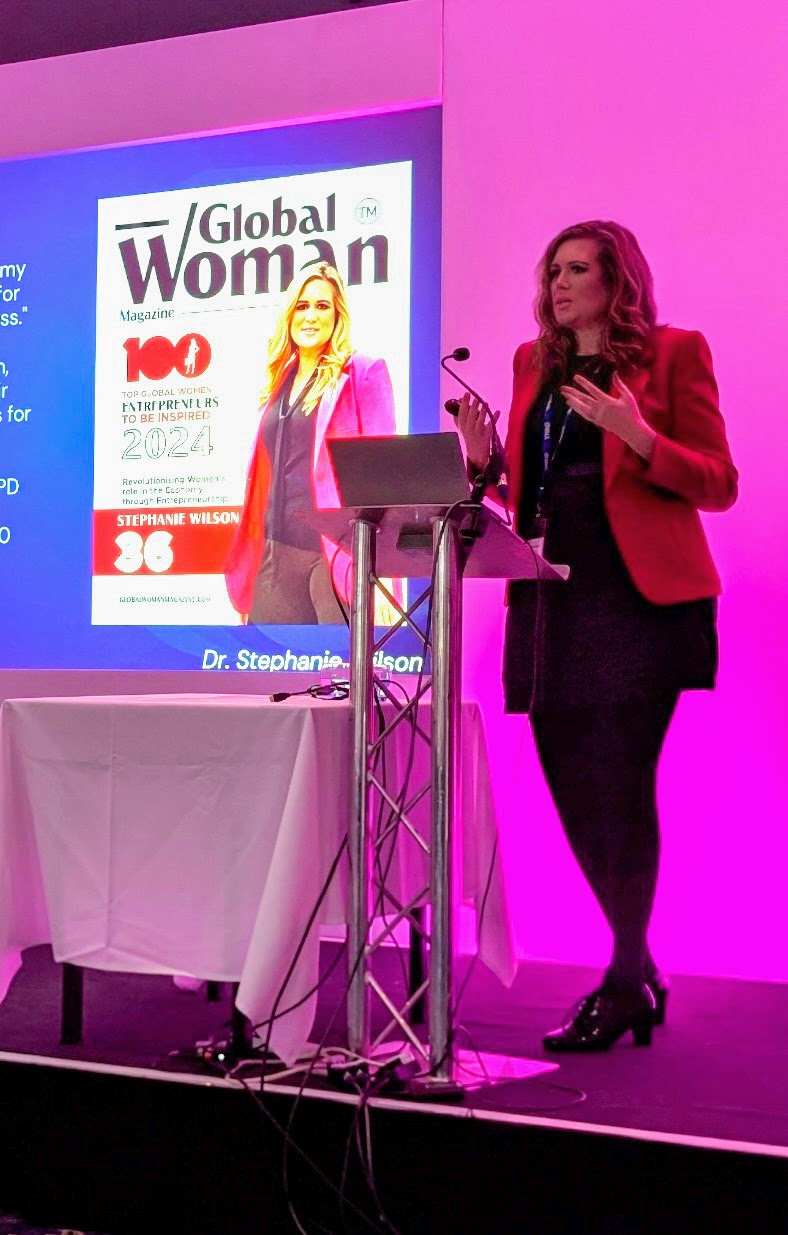
Fully Funded Accredited Business Accelerator for Women Entrepreneurs Now Accepting Global Applications

A groundbreaking opportunity has launched for women worldwide. 

The She’s In Business Accelerator, a fully funded and accredited programme from a woman-led, UK-registered university, is now accepting global applications.

Designed for women ready to launch or scale profitable consulting, coaching or service-based businesses, this high-impact accelerator, founded by autistic ADHD mother-of-four turned university lecturer, Dr. Stephanie Wilson, is 100% tuition-free for successful applicants.

And with limited funded places available, the time to apply is now.

A University-Led Business Accelerator Built By and For Women

Unlike traditional business programs, the She’s In Business Accelerator is:

Accredited

Delivered by a registered UK university

Run by women, for women

Tailored for mothers, professionals, and neurodiverse entrepreneurs

From strategy to sales, the program teaches what actually works — not just theory, but execution.

“You don’t need more noise. You need clarity, systems, and the confidence to lead,” founder Dr. Stephanie Wilson told That's Business.

“This is not a business club. This is a results-driven, university-backed accelerator built for real-world income.”

What Participants Get (At No Cost):

A milestone-based curriculum to turn your idea into income

Accredited certification from a UK university

Live coaching, accountability, and execution support

A global community of high-performing women entrepreneurs

Who Should Apply:

Aspiring or early-stage coaches, consultants, course creators, or service-based entrepreneurs

Women who are ready to sell confidently, scale sustainably, and stand out online

Professionals ready to turn their expertise into income

Mothers, neurodivergent women, and underrepresented leaders looking for a system that works for their life

Why It Matters:

Most programs teach business theory.

She’s In Business creates business income.

And with full funding available, the only investment required is your decision to go all in.

“We’re not just teaching business. We’re redefining what leadership looks like for women.”

And yes – it’s fully funded.

Because Success Shouldn’t Be a Solo Mission

This new data shows us what we already knew:

Women don’t need more motivation. They need models, mentorship, and money.

She’s In Business™, wspent years crafting an education ecosystem that meets women where they are, and lifts them to where they belong.

Whether you’re bootstrapping from savings, building at the kitchen table, or returning to a dream you’ve shelved for too long, this is your moment.

Their next cohort begins at the end of Feb 2026. Spaces are limited and funding is competitive but so are you.

Apply Now – Limited Funded Spots Available

https://shesinbusiness.co.uk/accelerator-programme/

This is a selective, high-demand accelerator. Applications are reviewed weekly and places are awarded on a rolling basis.

That's Food and Drink: How to Ruin Your Restaurant Without Really Trying ...

That's Food and Drink: How to Ruin Your Restaurant Without Really Trying ...: There’s a special kind of disappointment that comes from going back to a restaurant you love… only to realise it’s not the same place anymor...

Recycling or Greenwashing? Why “Made From Bottles” Isn’t Always Sustainable

Are We Recycling… or Just Shipping Our Guilt Abroad? 

The Carbon Footprint Question Behind Britain’s Plastic Bottle “Recycling.”

We all know the routine by now.

You finish a bottle of water, squash it down, put the lid back on (or don’t, depending on the council’s rules), and drop it into the recycling bin feeling like you’ve done your bit. A small win. A responsible moment. A tidy little act of modern virtue.

But what if that plastic bottle’s “recycling journey” isn’t quite the wholesome, planet-saving story we’ve been sold?

What if, instead, it becomes part of a global supply chain that involves being collected in Britain, transported across the world, turned into fabric, stitched into something fashionable, then shipped all the way back to us… to be sold at a premium price?

At that point, it’s fair to ask the uncomfortable question:

Are we genuinely reducing waste… or just moving it around the planet with extra steps and a bigger carbon footprint?

The recycling story we want to believe

In the ideal version of recycling, the system works like this:

Britain collects plastic bottles

They’re sorted and processed locally

They’re recycled into new bottles or useful products

The material stays in the UK economy

Carbon emissions are kept relatively low

This is the neat, circular, common-sense version. The kind of “closed loop” model that makes you feel that putting the bottle in the right bin actually matters.

And to be clear: it does matter, because plastic left to landfill or incineration is another headache entirely.

But the real world is rarely tidy.

The less cosy reality: a global journey

Some recycled plastic doesn’t stay in Britain. It becomes a commodity—baled, sold, and shipped abroad.

Historically, a huge portion of Western recycling was exported to Asia, with China playing an enormous role for many years. Even though regulations have changed over time and the picture has shifted, the wider issue remains the same: shipping waste (even “valuable” waste) overseas adds emissions.

And it doesn’t stop there.

That plastic may be:

shredded and melted

turned into pellets or fibres

spun into polyester thread

woven into fabric

cut and sewn into clothing

branded as “eco-conscious fashion

exported again… back to the UK or Europe

So what started as a humble bottle of water becomes a designer tote bag or recycled polyester jacket that costs more than the weekly shop.

Sounds impressive… but it also sounds like a lot of movement for something that was originally a local waste problem.

The carbon footprint question nobody wants to answer

Let’s be blunt.

Shipping materials halfway around the world is not carbon-free.

Even when modern container shipping is “efficient” compared to flying, it still burns enormous quantities of fuel. And recycling plastics isn’t magically low-energy either—it requires processing, heat, industrial machinery, and (often) further chemical treatments.

So when we hear:

“This bag is made from 20 recycled bottles!”

The question shouldn’t just be “how many bottles?”.

It should be:

Where were the bottles collected?

Where were they processed?

Where was the fabric produced?

Where was the bag stitched together?

How far did it travel, in total?

What happens when the bag wears out?

Because if your “recycled” product has done more miles than your car did last year, it’s worth pausing before we call it sustainable.

“Recycled” doesn’t always mean “environmentally friendly”

This is one of the most confusing parts of modern green living.

A product can be technically recycled material while still being part of a high-impact, high-emissions process.

Recycling is often framed like a moral good in itself, but it’s more accurate to think of recycling as damage control.

Better than litter. Better than landfill. Usually better than incineration.

But not always the magical solution we pretend it is.

And then there’s the next problem…

Bottle-to-clothing is not a closed loop

Here’s the awkward truth behind “plastic bottle clothing”:

A plastic bottle can be recycled into another bottle (sometimes)

That’s closer to a true circular loop.

But a plastic bottle turned into polyester clothing?

That’s often the end of the road.

Many textiles made from recycled plastic aren’t easily recycled again into new textiles. They’re blends, they degrade, they’re dyed, they’re treated, and when they wear out, they usually end up as waste.

So the bottle didn’t become “recycled forever”.

It became downcycled into something else… and then eventually binned.

That might still be useful as a one-time diversion of waste, but it isn’t the endless eco-loop people imagine.

The microfibre elephant in the wardrobe

There’s another environmental catch that rarely makes it into the marketing copy.

Polyester clothing sheds microfibres.

Every time synthetic fabric is washed, tiny plastic fibres can break away and enter wastewater. Some are filtered, some aren’t. Some end up in rivers and oceans.

So we’ve taken plastic bottles—something we can potentially keep in a contained recycling system—and turned them into clothing that can leak plastic particles over time.

Again: not necessarily worse overall, but it’s not the simple “green win” it’s sold as.

Why are we paying premium prices for our own waste?

This part stings a bit.

British consumers are encouraged to recycle, often with the implication that we’re contributing to sustainability. Then the material is sold, processed abroad, and returned to us as an expensive “ethical” product.

So we’ve effectively:

supplied the raw material for free

paid councils and systems to collect it

absorbed the inconvenience of sorting it

and then paid again to buy it back as fashion

All while the majority of profit is made somewhere in the middle.

And yes—some companies will argue (fairly) that the cost reflects ethical labour, safer supply chains, better quality, and responsible sourcing.

But not all “recycled bottle” products are transparent about any of that.

Which brings us to the real issue.

The transparency problem: we don’t actually know the journey

Most consumers have no idea where their recycled products were truly made or how far the materials travelled.

You’ll often see vague language like:

“made from recycled plastic bottles

“crafted from ocean-bound plastic

“using recycled materials”

“helping reduce waste”

But you won’t see:

full supply chain emissions

shipping mileage

energy mix used in processing

end-of-life recyclability

whether the plastic was actually local to the market

Without real transparency, we’re stuck relying on branding rather than facts.

And branding is cheap.

Is shipping recycling overseas ever justified?

To be fair, there are arguments in favour:

Some countries have specialised processing capacity

Some facilities can handle types of plastics others can’t

Some systems may be more efficient at scale

Recycling markets are global, like any commodity market

But the UK should still be asking:

Why aren’t we doing more of this processing at home?

If recycled plastic has value (and it clearly does), then keeping the supply chain local could mean:

UK jobs

better oversight

reduced shipping emissions

stronger circular economy

less reliance on overseas processing

We can’t talk endlessly about sustainability while outsourcing the messy part to somewhere else.

The real solution: reduce, reuse, then recycle

If this blogpost sounds sceptical, it’s because blind optimism is how we end up with systems that look good on paper and fail in real life.

Recycling can still be worthwhile.

But the most meaningful environmental wins still follow the old hierarchy:

Reduce (don’t create the waste)

Reuse (use the item again and again)

Recycle (process what’s left)

So maybe the bigger question isn’t:

“Can we make more bags out of bottles?”

It’s:

Why are we producing so many bottles in the first place?

Refill stations, deposit return schemes, better public water fountains, reusable containers, and less packaging overall would do far more than turning bottle waste into trendy accessories.

A simple rule for consumers: ask the awkward questions

If you want to support genuinely lower-impact products, look for brands that can answer:

Where was the product made?

Where was the recycled material sourced?

Is it locally processed?

Is it built to last?

Can it be repaired?

What happens at end of life?

A tote bag that lasts ten years is better than one that “saves 20 bottles” but falls apart in ten months.

Durability is sustainability, even when it’s not trendy.

Final thoughts: recycling isn’t a get-out-of-guilt card

Recycling should never be mocked. It’s a positive habit.

But it shouldn’t be treated as the holy solution either—especially when the reality involves:

long-distance shipping

industrial processing emissions

“eco” products sold back at luxury prices

vague marketing claims

and another layer of consumer guilt

If Britain is serious about sustainability, the goal shouldn’t be just “recycle more”.

It should be:

produce less plastic, build stronger local recycling infrastructure, and stop pretending that global shipping is an environmental shortcut.

Because if your recycled bottle becomes a designer bag that has crossed oceans twice…

You’re allowed to wonder whether the planet actually came out ahead.

Tuesday, 13 January 2026

Vyoma’s first Space Domain Awareness satellite has reached orbit

Vyoma, a Germany-based company providing Space Domain Awareness (SDA) capabilities, has launched its pioneering surveillance satellite, Flamingo-1, on Sunday, January 11th, 2026 from Vandenberg Space Force Base, California, USA. 

It was launched aboard the Twilight rideshare mission with SpaceX via Germany-based launch integrator Exolaunch

The satellite was deployed to its operational Sun-synchronous orbit of approximately 500-km in altitude. This marks a significant achievement for the company, which patented the operational concept of an optimized SDA mission.

Flamingo-1, equipped with an optical sensor for space-based space surveillance, is a gamechanger for Europe, strengthening SDA efforts directly from orbit. 

The advanced optical instrument will detect, track and characterize space objects, such as debris and other satellites. Crucially, it will allow Vyoma and its customers to follow up on manoeuvring objects and derive insights into adversary actions and threatening behaviours of other satellites.

Vyoma’s second satellite, Flamingo-2, is currently in production and is planned for launch at the end of 2026, followed by the remaining satellites of Vyoma’s constellation, to be deployed until 2029. The Flamingo constellation will keep custody of objects of interest and provide Domain Awareness updates in real time. The data generated from its satellites will enable Vyoma to create it’s own proprietary catalogue of space objects.

Together, these missions mark a significant step forward in advancing space technologies that align with European strategic and security goals.

Vyoma is a Munich-based company that leverages ground-based and space-based data to empower automated satellite operations and increase domain awareness in space. Founded in August 2020, Vyoma enables real-time space surveillance and traffic management of orbits around Earth, as a participant in the EU Commission and ESA programs for SDA technology development.

Waste to Wonder Worldwide Founder Alan Cooper Awarded OBE for Services to Charity and Sustainability

Waste to Wonder Worldwide is proud to announce that its founder, Alan Cooper, has been awarded an Officer of the Order of the British Empire (OBE) in the New Year Honours List, recognising his exceptional contributions to charity and sustainability.

Alan, (PICTURED) who received the official notification from the Cabinet Office in November, described the honour to That's Business as “a surprise, a thrill, and a moment to reflect on the journey so far.”

For more than 20 years, Alan has been at the forefront of ethical reuse and circular economy innovation

Since founding Waste to Wonder Worldwide, he has championed a simple but radical mantra: “Changing the perception of waste.” What began as a small initiative redistributing redundant office furniture has evolved into a global movement.

Under Alan’s leadership, Waste to Wonder Worldwide has:

Donated over £49 million (Fair Market Value) of furniture and equipment

Equipped over 1,500 schools across 47 countries, including the UK

Diverted thousands of tonnes of office furniture from landfill each year

Delivered award-winning social and environmental impact through reuse, education, and community development

Reflecting on the path ahead, Alan said: "Running a company brings with it many opportunities — to support customers, to embrace every skill and idea from colleagues, and to work alongside valued partners. But it also evokes an individual responsibility to do positive things further afield. ‘The world is your oyster,’ to coin a phrase."

He added: "As we look to 2026, companies and their employees will be able to sit down and plan how they can benefit others whom they may never meet — using their organisation as a catalyst to improve lives across the entire globe. Nil magnum nisi bonum: nothing is great except good."

About Waste to Wonder Worldwide

Waste to Wonder Worldwide is a social enterprise specialising in ethical office clearance, sustainable relocations, and circular economy programmes that support education and community development worldwide. Its flagship School in a Box initiative redirects surplus office furniture to underserved schools, providing vital resources while reducing waste and carbon emissions.

https://www.wastetowonder.com

The AI Skills That Will Define Business Success in 2026

Image courtesy QA
As businesses prepare for a decisive shift from AI experimentation to scaled adoption, tech training specialist QA has outlined the AI skills it believes will define business success in 2026, based on insights from Dr Vicky Crockett, Portfolio Director for Artificial Intelligence.

Why skills will define the next stage of AI adoption

As AI becomes increasingly embedded across everyday business tools, QA’s insights highlight the AI skills that business leaders will need to invest in most. 

This includes a shift from broad AI experimentation, towards deeper technical adoption and practical, human-centric capability.

Dr Vicky Crockett, QA’s Portfolio Director for Artificial Intelligence, told That's Business: “AI transformation isn’t optional in 2026, it’s the new competitive edge. As we head into 2026, we can increasingly see AI becoming the interface that we use to work with all other software.

As this develops further and AI pilot programmes move to scale, more people will need basic AI literacy and prompting proficiency training, and technical teams will need to train and manage AI systems at scale.”

QA’s insight suggests that the next phase of AI maturity will be defined less by technology and more by how effectively people work with it across every role, from frontline employees to senior leaders and technical teams.

Essential skills for employees, leaders and tech teams

QA’s insights break down the most in-demand skills across different teams. Here are some of the most important skills highlighted:

AI for all employees

Prompt engineering – Learning how to prompt effectively will become an essential skill

Critical and creative thinking with AI – AI may save us time, but learning to quality check and edit outputs will be key

Data awareness – It will be everyone’s role to understand how to use AI safely and securely.

AI for leaders

Strategic AI adoption – Leaders will need to understand how to scale AI in the most effective way.

Change management – AI transformation means change at every level and teams will need to balance resistance to change and adoption at scale.

AI ROI analysis – Change will happen at pace and it will be crucial to understand the investment and return data.

AI for tech teams

Building complex agentic AI systems – Tech teams will be required to build increasingly complex agentic AI systems.

Integration of apps within LLMs – 2026 will see apps arrive within LLMs and tech teams will need to capitalise.

Advanced prompting – Businesses will need to take prompting further, with sophisticated workflows and multi-step prompts.

The role of data and governance

As well as these key technical skills, it will be vital for businesses to pay attention to AI governance and compliance in 2026. Compliance frameworks will continue to evolve, and businesses must be ready to face this challenge.

“Most organisations will be creating AI governance structures if they haven’t already. This is likely to mean detailed AI training for leadership, governance and security teams, as well as mandatory AI literacy training for all staff so that they understand how to work with AI within their organisation’s policies.”

QA’s central message is clear: AI will not replace jobs, but it will fundamentally change how work is done. Organisations that invest early in the right AI skills will be better placed to improve productivity, manage risk, and build trust in AI-powered decision-making.

*Terms and conditions apply

Get skills ready for 2026 by exploring QA’s Most In-Demand AI Skills of 2026 and Dr Vicky Crockett's AI Predictions for the Year Ahead. 

https://www.qa.com/

87% of UK Professionals Pigeonhole Meditation as a "Sleep Aid," Risking Innovation and Resilience


A new report (https://www.klarosity.com/the-untapped-asset) reveals a startling "perception gap" in British business culture

While elite athletes and Silicon Valley executives increasingly rely on meditation as a cognitive strategy to reshape the brain and optimise output, the vast majority of UK business leaders fail to recognise its impact on professional performance.

The report, titled "The Untapped Asset: 2026 Perceptions of Meditation & Performance" was commissioned by klarosity (https://www.klarosity.com), a platform dedicated to meditation for high-performance environments. The findings indicate that while UK leaders face unprecedented pressure to innovate, they are ignoring one of the most evidence-based tools available to help them do so.

The Wellness Trap

The independent study of 300 UK professionals, managers, and C-Suite executives found that the business community overwhelmingly views meditation solely through the lens of wellness and relaxation, rather than cognitive training.

87% of respondents associate meditation primarily with "Relaxation" or "Sleep".

Only 11% associate the practice with improving "Innovation".

A mere 4% see meditation as a tool for building "Leadership Skills".

The Science vs. The Perception

This widespread skepticism contradicts decades of neuroscientific research. The report highlights that meditation is not a passive act of "zoning out," but an active cognitive exercise that induces neuroplasticity, the brain's ability to reorganise itself structurally and functionally.

Contrary to the view that meditation is just for "calming down," the report cites evidence showing that consistent practice leads to measurable performance gains:

Sharpened Decision Making: MRI studies have shown that meditation can increase cortical thickness in the prefrontal cortex, the area of the brain responsible for executive function, planning, and complex decision-making.

Resilience Under Pressure: Research demonstrates that meditation practice decreases grey matter density in the amygdala, the brain's "fight or flight" center. This structural change correlates with a leader's ability to maintain cognitive control and lower reactivity during high-stress situations.

Cognitive Focus: Studies on meditation have shown that even short-term meditation practice significantly improves attention span and conflict resolution scores compared to relaxation training alone17.

The "Innovation Deficit"

Simon Jones, (PICTURED) Founder & Managing Director of klarosity and externally accredited Meditation Teacher, told That's Business: “In high-performance environments like elite sport, meditation is no longer viewed as a 'wellness perk'. It is deployed as a critical strategy to sharpen focus and build resilience. Our data shows that UK business culture has not kept up. 

"We're seeing a clear 'Innovation Deficit.' In an economy that demands creative solutions and strong leadership, it is concerning that 87% of professionals still associate meditation primarily with relaxation and sleep, rather than performance. By pigeonholing meditation as just 'relaxation,' British businesses are leaving a massive competitive advantage on the table”.

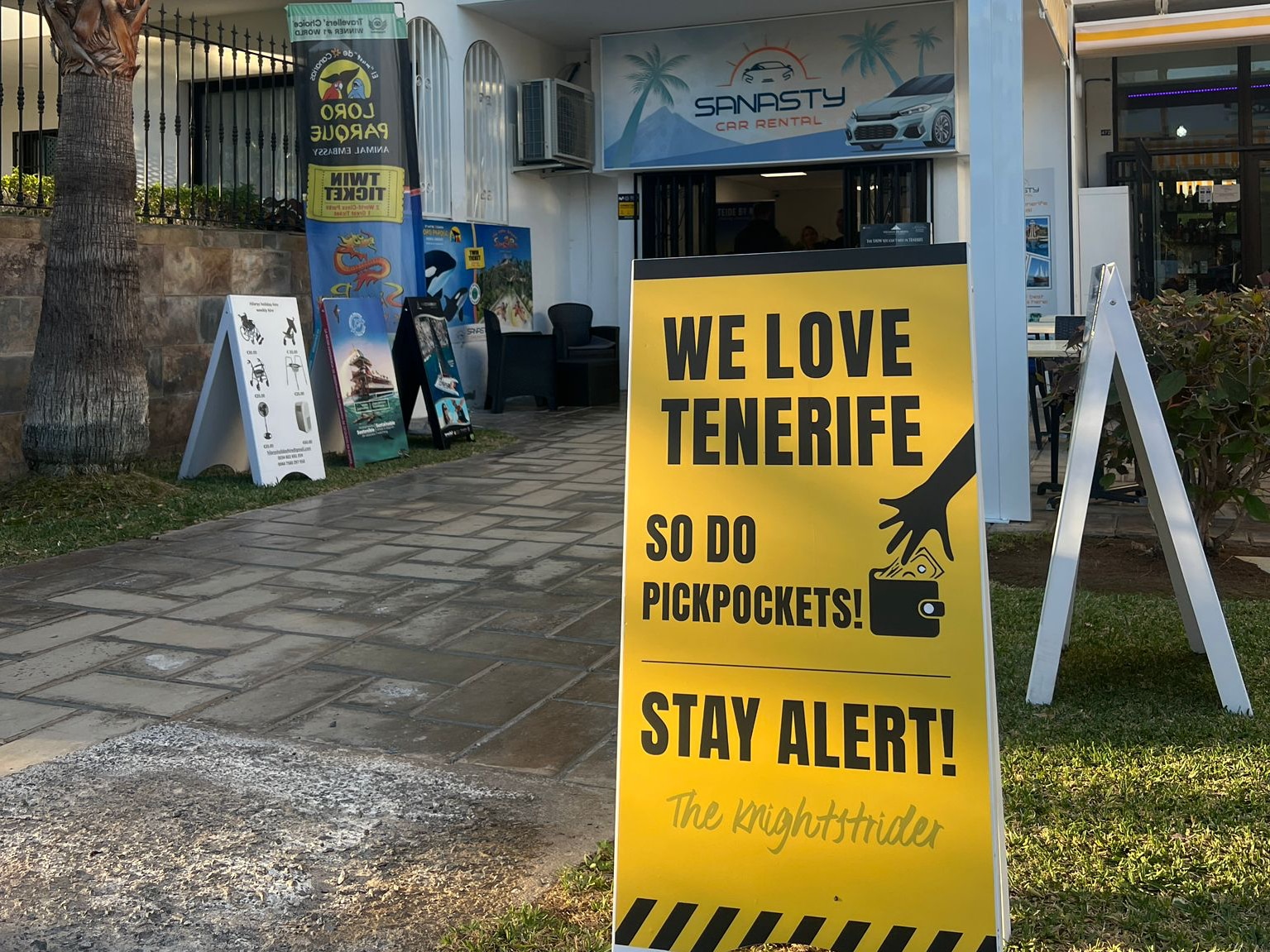
Local business explains ‘stay alert’ sign seen in Tenerife tourist area

A local business owner in Tenerife has explained the purpose of a “stay alert” sign that has recently been shared widely online and referenced in several UK and Spanish news reports.

The sign was placed outside Sanasty Car Rental in Los Cristianos by the company’s owner, Andrew, who lives on the island full-time and works closely with tourists throughout the year. 

He says the message is intended to encourage awareness rather than cause concern, particularly in busy holiday areas where visitors may be more relaxed.

Andrew explained that people on holiday often switch off from their usual routines, which can make them more vulnerable to opportunistic theft — something he says is common in busy tourist destinations across Europe.

“On holiday, people naturally switch off – and that’s exactly when pickpockets take advantage.

I felt it was far better to warn visitors so they can relax and enjoy their holiday safely, rather than be robbed and leave Tenerife with a bad experience they’ll never forget.”

He added the sign was designed and paid for privately and is located outside his own business premises, rather than being an official notice or authority-issued warning. According to Andrew, the aim is simply to prompt a moment of awareness as people pass by, reminding them to keep personal belongings secure while enjoying their stay.

“The island’s popularity is growing every year, and with that comes responsibility. People come into my office daily just to thank us for the warning. It’s important to be honest and protect visitors, not sweep the issue under the rug.”

Andrew has also shared a short video on his YouTube channel showing when the sign was first put in place and explaining the thinking behind it, which he says has helped answer questions from viewers and visitors alike:

Sanasty Car Rental says it regularly offers practical advice to customers on keeping belongings safe while travelling, with the aim of helping visitors enjoy Tenerife and leave with positive memories of the island.

https://sanasty.com

ScamAid Launches Global Fund Recovery Services to Support Victims of Online Scams

ScamAid has announced the launch of its global fund recovery services, aimed at helping individuals recover money lost to online investment scams.

ScamAid supports victims of unregulated trading platforms, including binary options, forex and cryptocurrency schemes

The company works with clients worldwide, assisting in a structured recovery process designed to pursue lost funds clearly and transparently.

With offices in London and Zurich, ScamAid operates internationally and offers multilingual support to clients across Europe, North America, and other regions. 

The company combines financial and legal expertise to assess each case individually and determine the most appropriate recovery path.

In addition to fund recovery, ScamAid places strong emphasis on education and prevention. The company aims to help clients better understand how online investment scams operate, reducing the risk of future financial loss.

ScamAid’s mission is to assist scam victims in recovering their funds as efficiently as possible, while contributing to greater awareness and accountability within the online investment space.

For more information, visit: https://scamaid.io

Saturday, 10 January 2026

Starlink: How the Satellite Internet System Works

Reliable broadband is still a challenge in many rural, coastal, and hard-to-reach parts of the UK and beyond.

That’s where Starlink, developed by SpaceX, comes in. Rather than relying on underground cables or nearby masts, Starlink delivers high-speed internet directly from space.

But how does it actually work?

What is Starlink?

Starlink is a satellite-based internet service designed to provide fast, low-latency broadband almost anywhere on Earth. Instead of a small number of satellites positioned far above the planet, Starlink uses thousands of small satellites flying in low Earth orbit (LEO), typically around 550 km above the surface.

This lower altitude is key to how Starlink differs from traditional satellite internet.

The Core Components of the Starlink System

Starlink relies on three main elements working together seamlessly:

1. Low Earth Orbit Satellites

Starlink satellites constantly orbit the Earth in carefully coordinated paths. Because they are much closer to the ground than older geostationary satellites, data has a far shorter distance to travel. This dramatically reduces lag, making activities like video calls, streaming, and online gaming far more practical.

2. Ground Stations (Gateways)

Around the world, Starlink operates ground stations connected to the fibre-optic internet backbone. These gateways send data up to the satellites and receive data back from them, acting as a bridge between space and the wider internet.

3. The Starlink Dish (User Terminal)

Customers receive a small satellite dish, often nicknamed “Dishy”, which automatically aligns itself to track passing satellites. Once powered and connected, it communicates directly with the constellation overhead, switching between satellites as they move across the sky.

How Data Travels Through Starlink

When you load a webpage or stream a film, the process looks like this:

Your device sends data to the Starlink router.

The router passes the signal to the Starlink dish.

The dish beams the data up to the nearest Starlink satellite.

The satellite relays it to a ground station (or via other satellites).

The data reaches the internet and the response follows the same path back.

All of this happens in milliseconds, giving performance that often rivals fixed-line broadband.

Why Low Earth Orbit Matters

Traditional satellite internet services use geostationary satellites positioned around 35,000 km above Earth. While they cover large areas, the long distance causes noticeable delays.

Starlink’s low-orbit approach offers:

Lower latency (often 20–40 ms)

Higher speeds

More consistent connections

The trade-off is complexity: thousands of satellites are needed to ensure continuous coverage as each one moves rapidly across the sky.

Where Starlink is Most Useful

Starlink is particularly valuable for:

Rural and remote homes

Farms and isolated businesses

Coastal and island communities

Mobile users such as caravans, boats, and emergency services

In areas where fibre or reliable 4G/5G is unavailable or unstable, Starlink can be genuinely transformative.

Limitations and Considerations

While impressive, Starlink isn’t perfect:

Equipment costs are higher than many standard broadband packages

Performance can be affected by extreme weather

Clear sky visibility is important for best results

Even so, the system continues to improve as more satellites are launched and software is refined.

The Bigger Picture

Starlink represents a major shift in how internet infrastructure can be delivered—moving from ground-based networks to space-based ones. As the constellation grows and technology advances, satellite internet is becoming a serious, mainstream alternative rather than a last resort.

For many households and businesses previously left behind by traditional broadband, Starlink offers something genuinely new: fast, usable internet almost anywhere on Earth.

https://starlink.com

Monday, 5 January 2026

That's Technology: What Benefits Does YouTube Hype Bring to Channels?

That's Technology: What Benefits Does YouTube Hype Bring to Channels?: In the crowded world of online video, hype is often the difference between a channel that quietly ticks along and one that suddenly takes o...