Showing posts with label disabled. Show all posts

Tuesday, 10 March 2026

UKs Largest survey of its kind invites disabled people to share their everyday barriers to create urgently needed fairer design

A staggering One in five people in the UK are disabled. Many face multiple unnecessary barriers every single day. 

The Unfair Index by UK charity Designability has a plan to change that.

UK charity Designability has launched a major survey calling on 10,000 disabled people across the UK to take part. The Unfair Index: Designing a Fairer Future gives disabled people the chance to share the everyday barriers they face, at home, work, online, in public spaces and in their communities. 

The findings will be used to create the UK’s first Unfair Index, highlighting the most unfair barriers in everyday life, focusing on those that are urgent, harmful, and possible to fix through better design.

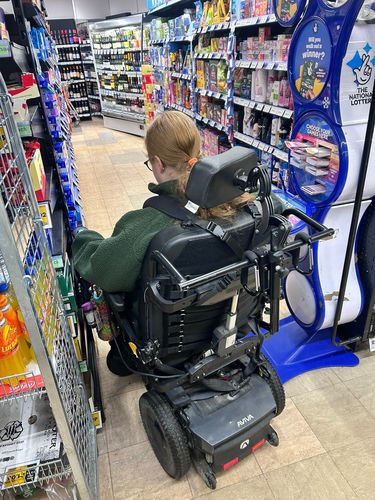
Highlighting why this work matters, Saida, a powered wheelchair user taking part, told That's Business: “at the moment I’m being met with performative talk, people say they will do it... but they don’t. We don’t want slow changes. We want to live like everyone else. Why does it have to be an add-on thought? I’m a human being. Treat me like one and I’ll treat you like one.”

The project has been co-designed with a pan-disability Lived Experience Advisory Panel, made up of people with a wide range of experiences and impairments, ensuring disabled people’s voices are central. 

With over 900 disabled people applying to take part, Norin, a panel member from London, said: “As a person with lived experience facing challenges and barriers in everyday life, and coping with so many inaccessible facilities, services, products, design and transport, I joined the panel to contribute my experiences.”

Designability’s Chief Executive, Jim Bowes, explained why this large-scale survey is significant: “Millions of disabled people face barriers every day that stop them fully participating in daily life. Whether that’s financially, socially or academically, we’ve designed the world to be unfair for so many people – and we believe with good design we can do better. This survey is about listening at scale and then identifying what practical solutions could make a real difference to everyday barriers.”

The Unfair Index survey covers a wide range of areas, including health and wellbeing, life at home and managing money, getting out and about, shopping, social and community life, technology and learning and work.

The survey is one of the largest of its kind in the UK. The findings will help Designability shape its priorities over the next three to five years and provide actionable insights for designers, organisations, and policymakers — challenging people to think, design and build differently. Where barriers fall outside the charity’s expertise, insights will be shared with other companies and organisations to help drive wider societal change.

Jim Bowes added: “We know some of the barriers raised will need policy change or wider behaviour change. Where that’s the case, we’ll make sure the evidence is shared with those best placed to act, so it can still help drive real-world change. The scale of unfairness means action is needed now”

Disabled people, people who are neurodiverse, unpaid carers and parents of disabled children across the UK are now being invited to take part in the survey until the end of April and share their experiences to help inform future action. The Unfair Index will be published later in 2026.

You can participate in the survey here http://www.theunfairindex.designability.org.uk.

If you know people who are impacted by the issues raised here, please forward this blogpost to them so they can participate in the survery.

Monday, 2 March 2026

Why Are Some Businesses Still Confused About Guide Dog Access Rights?

For many disabled people across the UK, assistance dogs are not a luxury, they are essential to independent living. 

Yet, despite clear legal protections, there are still reports of guide dog users being refused entry to restaurants, cafés, shops, and even taxis.

For small businesses and sole traders reading That’s Business, this isn’t just a moral issue, it’s a legal and reputational one.

The Law Is Clear

Under the Equality Act 2010, it is unlawful for service providers to treat disabled people less favourably because of their disability. 

This includes refusing entry to someone because they are accompanied by an assistance dog.

Assistance dogs, including those trained by organisations such as Guide Dogs, are highly trained working animals. They are not pets. They are classed as auxiliary aids under equality legislation.

Businesses that provide goods or services to the public — including:

Restaurants and cafés, Pubs and hotels, Retail shops, Hairdressers and salons, Private hire vehicles and taxis must make reasonable adjustments to ensure disabled customers can access their services.

Refusing entry to a guide dog user is usually unlawful discrimination.

So Why Does Confusion Persist?

Despite the clarity of the law, misunderstandings still arise. Here are some common reasons.

1. “No Dogs” Policies

Some businesses operate strict “no dogs” rules, particularly food premises. Staff may incorrectly assume this applies to assistance dogs.

However, food hygiene regulations do not override equality law. Assistance dogs are permitted in food-serving areas.

2. Lack of Staff Training

Frontline staff often make access decisions. If they haven’t received proper equality training, they may:

Assume dogs are unhygienic

Believe customers must show paperwork

Think allergies justify refusal

Feel unsure how to handle other customers’ complaints

Many simply do not know the law.

3. Taxi Exemptions Confusion

Taxi and private hire drivers sometimes claim religious objections, allergies, or personal preferences.

While limited medical exemptions exist for drivers with certified conditions, these must be formally registered with the local authority. Personal preference or fear of dogs is not a valid legal reason for refusal.

Local authorities can prosecute drivers who unlawfully refuse assistance dog users. And this does happpen.

4. Small Business Knowledge Gaps

Microbusinesses and sole traders often operate without HR support or formal compliance processes. If no one has explicitly reviewed equality obligations, gaps emerge.

The Real Cost to Business

Beyond legal risk, the reputational damage can be significant.

Stories of refused access frequently spread quickly via social media and local press. For independent businesses, trust and goodwill are everything.

Refusal can lead to:

Complaints to local authorities

Civil claims

Licensing consequences (especially for taxi drivers)

Online backlash

Loss of repeat custom

In contrast, inclusive businesses build loyal communities.

What Can Be Done?

1. Mandatory Equality Refresher Training

Local authorities could require short, practical equality training as part of licensing for:

Taxi drivers

Food businesses

Hospitality venues

This would reinforce responsibilities under the Equality Act 2010.

2. Clearer Local Authority Communication

When issuing taxi or food premises licences, councils should provide:

Plain-English guidance

Simple “Assistance Dogs Welcome” signage

A clear explanation of consequences for refusal

3. Visible Signage

Displaying assistance dog welcome signs reduces confusion and reassures customers before issues arise.

4. Industry Body Leadership

Trade groups in hospitality and transport can play a bigger role in educating members and normalising compliance.

5. Customer Education — Calm and Constructive

When disputes occur, they often escalate because neither side feels confident. Businesses that handle concerns calmly, apologise quickly, and correct mistakes tend to avoid long-term damage.

A Business Perspective: Risk vs Responsibility

For any business owner, this is ultimately about risk management and values.

Complying with equality law:

Protects your licence

Protects your reputation

Protects your revenue

Demonstrates leadership

Ignoring it does the opposite.

In an era where customer experience and social responsibility matter more than ever, inclusion is not optional — it is part of modern business practice.

Most access refusals are not malicious. They are rooted in misunderstanding. But misunderstanding is no defence in law.

If you run a business, especially in hospitality, retail, or transport, now is a good time to review your policies, refresh your training, and ensure your team understands that assistance dogs are not pets.

They are working partners.

And welcoming them is not just good ethics.

It’s good business.

https://www.legislation.gov.uk/ukpga/2010/15/introduction

It should be noted that local authorities take this matter very seriously

A TAXI driver has been fined more than £1000, after refusing to transport a guide dog and its owner in Witham.

https://www.braintreeandwithamtimes.co.uk/news/25350007.witham-taxi-driver-fined-refusing-transport-guide-dog-owner/

Access refusals prompt 40% rise in discrimination claims from guide dog and assistance dog users

https://www.stephensons.co.uk/site/news_and_events/uptodatenews/forty-percent-rise-discrimination-claims-from-guide-dog-users

Tuesday, 24 October 2023

Jasmine, 6, saved from disability grant disaster by homelift company

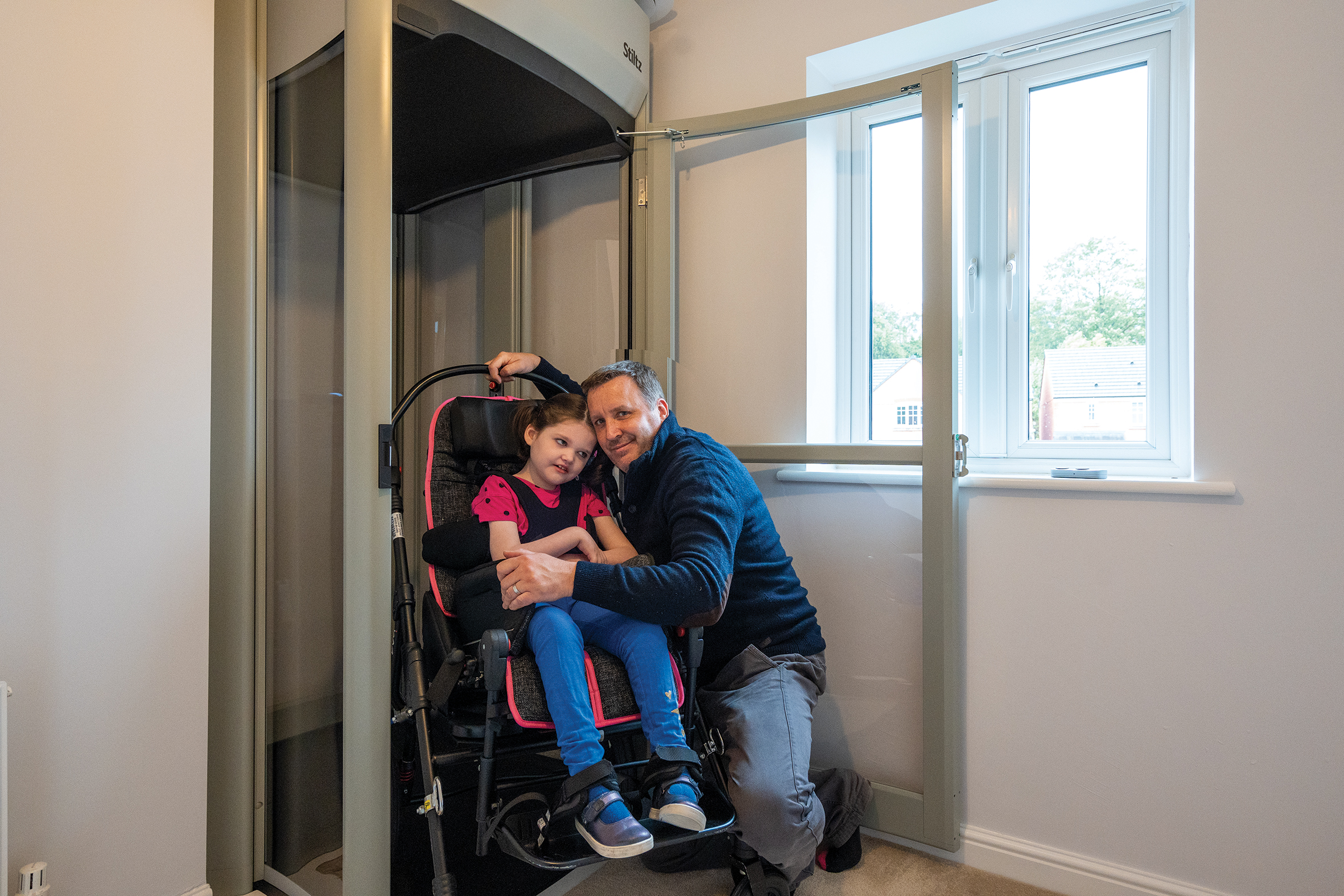
Jasmine and Andy
Jasmine Blueman, 6, from Stockport, has complex disabilities and was facing huge access and well-being challenges at home until Stiltz Homelifts stepped in to solve her family's Disabled Facilities Grant nightmare.

Jasmine, a full-time wheelchair user, is cared for 24/7 by her parents Andy and Tara. Andy, an airfield operations manager at Manchester Airport, applied for a Disabled Facilities Grant (DFG) over two years ago. A DFG can be provided by a local authority to help with the cost of home accessibility adaptations. Andy and Tara chose to use this support to fund a lift as the stairs were a massive obstacle in their lives. For Jasmine to access her bedroom and a bathroom, she had to be carried up and down the stairs which became unsafe. They desperately needed a solution.

“Jasmine loves being with family, playing with sensory toys and getting out into the garden” says Andy. “She has Global Motor Delay, which is similar to cerebral palsy, and is non-verbal and non-mobile. Plus like any child she’s having growth spurts and is getting heavier. As a result, my wife was really struggling to lift Jasmine. At one stage they both fell on the stairs when I was away working nights. It was such a frightening experience and a real wake up call for Tara and I. Thankfully neither of them was badly hurt but we knew then, this simply couldn’t be allowed to happen again.”

The Blueman’s ordered a through-floor lift from the local council’s primary supplier. On the day of installation, which was time critical due to a wider house conversion issue, the lift manufacturer just failed to turn up without any warning. This compromised the whole build and was the ‘final straw’ for the entire family. The stress they had experienced battling to get this lift funded and installed, coupled with Jasmine’s ill health, meant they were at breaking point. They turned to Stiltz to save the day.

Andy continues: “We made contact with Stiltz and one of their Trusted Assessors came out. Alastair couldn’t do enough to help. He agreed with us the homelift should go where we originally wanted it, in the kitchen leading straight upstairs into Jasmine’s bedroom. Alastair worked closely with us on the DFG application always following up and pushing it along because he knew our situation was desperate. He made sure there was constant dialogue with all parties.”

The family did meet with some resistance from their local council about specifying a Stiltz Homelift but they remained persistence and eventually approval was given. Stiltz managed its own builders, electricians and installers to fit the homelift without any issues. This meant within a matter of weeks the Bluemans had full access around their home and could provide greater care and safety for their daughter. Their nightmare had finally come to an end.

Andy concludes: “Our homelift is amazing, it’s made a huge difference to our lives. Jasmine can now come down from her room straight into the kitchen with easy access to the lounge, her playroom and outside. All at the push of a button on one of the remote controls. As Jasmine grows we're going to be even more reliant on the homelift. It’s not just invaluable for us but eventually when we need to call on respite carers, it's something they will also need to ensure safe manual handling. Most importantly though, Jasmine loves riding in the lift and looking at the lights.”

“And just to add, if you are thinking about a DFG you may need to push. There are restrictions but we’ve shown you can overcome these. Don’t assume the supplier they recommend is the best option for you. I know Stiltz is increasingly preferred by lots of councils now, but every authority has a duty to provide what’s best for children with disabilities. In our case it was a Stiltz Homelift for sure.”

FACTFILE: Award-winning multi-national Stiltz is a specialist manufacturer of pioneering through-floor homelifts. Its life-enhancing 2-person Duo Homelift and 3-person, wheelchair-accessible Trio Homelift, deliver a superior alternative to stair lifts with world-class design that adds value. Stiltz recognises its duty of care to individuals living with restricted mobility through client-centric assessment – 100% focused on positive outcomes for all. Solutions that synergise adaptability, performance and safety, all with contemporary and compelling styling, provide the answer to enhanced well-being and inclusion in the home.

https://www.stiltz.co.uk/