Showing posts with label Europe. Show all posts

Wednesday, 15 April 2026

Europe Delivers Names New Chair. And Signals a Shift from Talk to Action

Europe’s business leaders are done talking. They want results.

That was the clear message from Zurich this week, where Europe Delivers, the senior leadership coalition convened by Xynteo, announced a major leadership change alongside a push for real, measurable impact.

Huibert Vigeveno, Group CEO of MET Group, has been appointed Chairman of the coalition, succeeding Peter Voser, who now steps into a Chairman Emeritus role at ABB.

The timing matters. The appointment coincides with MET Group joining the coalition — and with Europe Delivers wrapping its 2026 Summit not with another statement of intent, but with four concrete, cross-industry projects.

From ambition to execution

The coalition has launched initiatives across four areas that will define Europe’s economic future:

Defence

Critical minerals

Energy

Data & AI

These aren’t abstract talking points. They’re designed to drive competitiveness, strengthen supply chains, and accelerate growth in sectors where collaboration — not competition — is the key to progress.

Vigeveno made the tone shift explicit: He told THat's Business: “Europe needs stronger coordination between business leaders… The opportunity now is to move beyond alignment and deliver tangible outcomes.”

That’s a notable change in emphasis. For years, European business forums have been criticised for producing glossy reports but limited real-world impact. Europe Delivers is positioning itself as something different: a delivery engine, not a discussion club.

Why this matters for business

The coalition’s model is simple but powerful, bring together senior leaders across industries and focus them on problems no single company can solve alone.

That includes:

Securing critical resources

Scaling energy transition infrastructure

Navigating defence and geopolitical pressures

Harnessing AI responsibly and competitively

Outgoing Chair Peter Voser underscored the shift, pointing to Vigeveno’s track record in turning strategy into execution.

A coalition built for pressure points

Europe Delivers is betting on collaboration as a competitive advantage. In a fragmented global economy, the ability to align industries and act quickly could be what separates Europe from faster-moving rivals.

The real test now? Delivery.

Because in today’s business climate, ambition is cheap. But execution is everything.

https://xynteo.com

Thursday, 5 February 2026

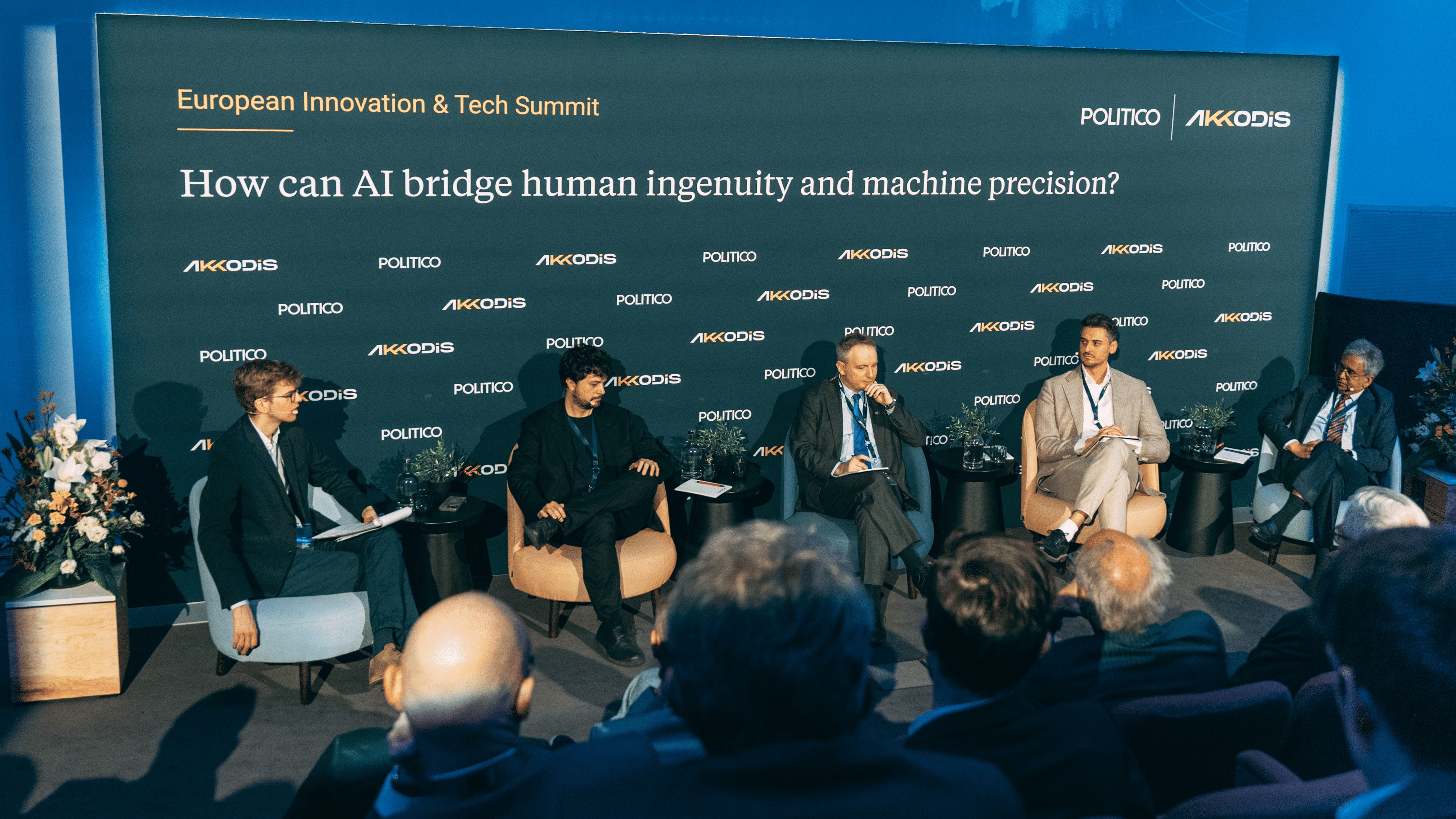
Between autonomy and alliance: Akkodis and POLITICO convene decision-makers for the future of AI made in Europe

Europe’s debate on AI is shifting from ambition to execution. At the first European Innovation & Tech Summit, hosted by Akkodis in partnership with POLITICO, policymakers, industry leaders and researchers examined one of Europe’s most urgent challenges: how to turn world‑class AI research and regulation into scalable, trusted real‑world deployment.

Akkodis, a Europe based global digital engineering consulting leader – part of The Adecco Group - together with POLITICO, brought senior decisionmakers to Brussels at the invitation-only summit to address a central question shaping Europe’s competitiveness: How can AI bridge human ingenuity and machine precision?

Discussions highlighted that Europe’s future competitiveness will depend on deploying AI at scale across four strategic sectors: healthcare & life sciences, the public sector, autonomous driving & robotics, and defense. 

These areas combine high societal value, strict regulatory demands and strong deployment potential, making them essential to Europe’s AI leadership and sovereignty. As a result, participants focused on concrete implementation strategies, noting that progress in these sectors will determine Europe’s ability to turn AI into a driver of competitiveness, resilience and public trust.

Responsible AI as Europe’s Competitive Advantage

Across sessions, speakers reaffirmed that responsible AI is no longer an abstract principle but a baseline requirement. Speakers emphasized that trust in AI systems cannot be achieved through principles alone, but will require:

Clear accountability frameworks

Transparent and explainable decision‑making

Robust governance structures

Human-in-the-loop approaches

Deployable operational models for compliance

Sovereign and secure data infrastructures

Many argued that Europe’s regulatory leadership can become a competitive advantage – if paired with practical deployment templates that organizations can adopt quickly.

Autonomy vs Alliance: Europe’s strategic crossroads

POLITICO’s Spotlight session, “Between Autonomy and Alliance: Can Europe still shape the rules?” illustrated the geopolitical dimension of AI. In February, the world’s focus converges on two key high-level policy gatherings: The Munich Security Conference will set the tone on defense and the India AI Impact Summit is expected to advance a Global South-led vision for digital development. On the future of AI, Europe finds itself caught in the crossfire of this geopolitical apex. The debate exposed growing tensions in Europe’s AI strategy: while calls for technological sovereignty are increasing, European companies and public institutions remain heavily dependent on non-European foundation models and infrastructures. Speakers highlighted the potential of balanced global partnerships to truly unlock innovation at scale.

"The European Innovation & Tech Summit made one thing very clear: Europe does not lack AI ambition. With strong alliances we will accelerate and innovate for measurable impact,” said Jo Debecker, President & CEO of Akkodis, told That's Business.

“If Europe wants to lead in trustworthy and human-centric AI, regulation must be matched with scalable solutions, sovereign data infrastructures and AI gigafactories, as well as governance models that organizations can actually use. Akkodis sees its role as bridging research, policy and real-world application."

Jamil Anderlini, POLITICO Regional Director, Europe outlines the discussions of the summit: “What makes AI such a consequential issue for Europe is not just the technology itself, but the economic and policy choices around it. Decisions made in Brussels increasingly influence how AI is governed globally, which is why these discussions are so important for both Europe and the wider international system.”

“AI is but one of the key factors that will reshape the world order sooner and more thoroughly than we are prepared for. Brace yourselves for an interesting second quarter of the 21st century”, said Jacques Pitteloud, Head of the Mission of Switzerland to NATO & Ambassador of Switzerland to the Kingdom of Belgium.

“Ports are the perfect proving ground for autonomous technologies – our role is to enable innovators to test, learn and scale solutions that will transform the entire logistics ecosystem”, said Jonathan Van Cauwenberge, Port of the Future Advisor, Port of Antwerp-Bruges.

“New technology is offering us today, more than ever, remarkable tools to provide a better patient care. The 2026 European Innovation & Tech Summit in Brussels was a fantastic opportunity to discuss with experts and decision makers how we could collectively drive forward the healthcare model for the best interest of patients and for the best support of healthcare professionals”, said Ziad Matta, General Manager Servier BELUX, Board Member, Chamber of Commerce France-Belgium.

A forum for Europe’s technology & innovation decision-makers in the intelligent age

The European Innovation & Tech Summit represents a strategic step toward deeper European cooperation and broader global engagement on AI. Akkodis plans to continue the format as a platform for cross-border dialogue, with a clear focus on implementation, measurable impact and responsible innovation.

http://www.adeccogroup.com

Sunday, 30 October 2011

Global Economic Forecast

The following report is written by staff at the EIU and is carried in its entirety by That's Business for the benefit of our readers:- 

The Economist Intelligence Unit has reduced its 2012 GDP forecast for the euro zone. We now expect the economy to contract by 0.3% compared with our previous forecast of growth of 0.8%. The debt crisis in the euro zone periphery shows little sign of prompt resolution, despite greater efforts from political leaders in recent weeks. Stress on euro zone banks is deepening; a much-discussed bank recapitalisation, if it happens, will be positive for sentiment, but it is likely to be a contentious process. Most euro zone economic indicators have turned negative, and a recession seems inevitable.

• We have also lowered our forecast for US economic growth in 2012 to 1.3% (from 2% previously). Contagion effects from the euro zone crisis, mainly on US financial markets and banks, will curb business investment and consumer spending. We now expect only some elements of Barack Obama's jobs plan, which would have been supportive for the economy, to be enacted. Unlike in the euro zone, though, most US economic indicators remain mildly positive, suggesting a measure of resilience by consumers in the face of severe economic shocks.

• Following on from our downgrades to euro zone and US economic growth next year, we have also reduced our growth forecasts for most emerging markets. Countries with significant trade exposure to the large Western economies will feel the greatest impact. We have lowered our 2012 GDP growth forecast for China to 8.2% (from 8.6% previously). China's government has the motivation and the means to stimulate the domestic economy if external demand falls too sharply.

• Asset markets continue to veer almost daily from a risk-tolerant to a risk-averse posture, based largely on developments in the euro zone, but also on economic data, especially from the US and China. Our forecast for slower growth in most countries next year implies a strengthening of safe-haven assets, such as the US dollar and developed-country bonds, and a weaker performance for risk-related assets, including equities, commodities and commodity-related currencies.

Global Economic Forecast, November 2011 is available to download, for free, at http://gfs.eiu.com

Thursday, 21 July 2011

Eurostar reports continued strong growth

Eurostar, the high speed passenger rail service between the UK and mainland Europe, has reported continued strong growth in the first half of 2011. Overall sales revenues increased by 4% from £404 million to £421 million and passenger numbers went up by 3% from 4.6 million to 4.7 million.

This year-on-year growth is particularly strong given that in the first half of 2010 Eurostar benefited from increased sales revenues resulting from the ash cloud disruption, during which it ran 70 extra trains and carried 100,000 extra passengers. Excluding the positive impact of the ash cloud disruption on the 2010 figures, underlying H1 2011 sales revenues in fact grew by 12% in comparison with the same period last year.

Eurostar is reporting over the first half of the year, leisure sales revenues grew by 8% and leisure passenger volumes were up 4%.

Demand for bookings over the summer period is high and over 950,000 passengers travelled on Eurostar in July alone making this a bumper summer for high speed rail travel. As a result, over 20 extra services have been scheduled to run over the summer.

Whilst Eurostar has reported a rise in the overall number of passengers over the last six months, there has been a particular spike in the volume of international travellers.

Over the first half of the year the number of international passengers rose by 21% to over half a million travellers. This was driven in part by a strong increase in passengers originating from the US who increasingly see a trip on Eurostar as an integral part of a European tour.

Nicolas Petrovic, CEO of Eurostar, commented: "The growth in the number of travellers heading for London earlier in the year has gathered momentum and in the first half international bookings have gone up by over 20 per cent. With 'Royal Wedding fever', London 2012 and the Queen’s Diamond Jubilee on the horizon, London is highly attractive and remains a 'hot' destination for international visitors."

In the first quarter of 2011 Eurostar saw a 9% rise in Business Premier sales revenues and this strong performance continued through the first six months of the year.

This uplift is a reflection of the high levels of transactions and activity among businesses operating between the UK and the continent, particularly the financial services sector.

Nicolas Petrovic continued: "Over the last six months we have introduced a range of upgrades to our business premier service including guaranteed boarding, new Alain Roux menus and on board taxi booking to ensure that passengers' time on board is as enjoyable and productive as possible."

Thursday, 14 April 2011

Eurostar to boost service levels


Eurostar will be changing its branding and introducing new service enhancements for its travellers, with Eurostar wishing to reflect its plans and ambitions for the business in the future.

Over the last few years Eurostar has seen a big increase in the number of passengers choosing to connect through Lille, Brussels and Paris Gare du Nord to other destinations. This has been driven by shorter journey times and the growing desire among customers to travel in an environmentally responsible, sustainable way.

Whereas in the past Eurostar was an unincorporated partnership of three railways its business was transformed last year into one single corporate entity. Eurostar is no longer just operating in three markets - UK, France and Belgium - and its ambition is to broaden its reach and encourage customers to ditch the plane and travel further into Europe by high speed rail. Eurostar is looking to expand its horizons to the South of France, Germany and the Netherlands. To mark the start of this new chapter and signal the change within the business Eurostar has developed a new identity.

The new logo was given a lot of thought, as Eurostar are aware how much travellers like its logo. This change was researched extensively to ensure that it captures the key characteristics of Eurostar and creates an identity that signals the next phase of the business.

The new branding will be rolled out gradually over the coming weeks and months. The first changes will take place on the Eurostar website and on travel tickets, with it then moving on to logos within stations and on trains.

Over the coming months Business Premier customers will see a number of enhancements to the Eurostar service based on business customers' feedback. These include guaranteed boarding, menus from Alain Roux and an onboard taxi booking service.

Eurostar leisure customers will also see a number of improvements. Eurostar staff have expert knowledge about the destinations and want to use that expertise to enhance the overall experience for the customers. To ensure that leisure customers get the most out of their trip, Eurostar is forging partnerships across cities which ensure that its travellers get the most out of their leisure time at no extra cost – be it art, music, sport, gastronomy or shopping.

The Eurostar Plus initiative, for example, gives customers 'two for the price of one' entry to the leading galleries and museums in London, Paris and Brussels and has recently struck a deal with Jamie Oliver whereby customers travelling from the continent can get a 15% discount at his '15' restaurant in London.

Eurostar will also be upgrading its fleet and purchasing 10 new trainsets which complement its existing fleet.