
With less than a month to go before the new code of practice for Right to Work comes into full legal effect, UK employers are being warned that a simple administrative slip-up could now cost a business up to £60,000 per illegal worker.
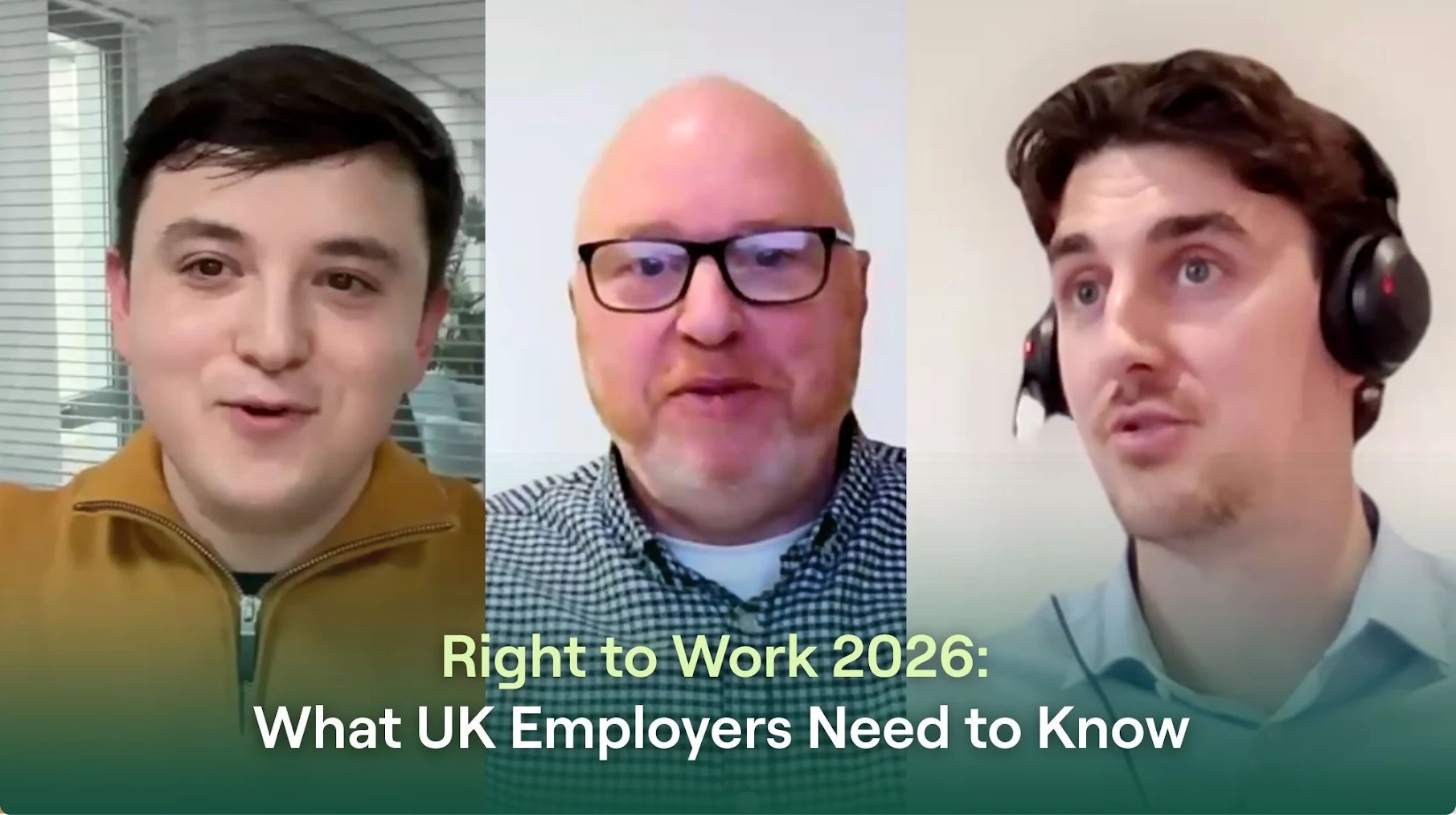
Speaking on the Recruitment Reimagined webinar series, hosted by Reach ATS, Right to Work (RTW) experts Paul Herring and James Marsden from Rightcheck discussed how businesses can protect themselves, and their employer brand, as fraudsters adopt increasingly sophisticated tactics.
As the Home Office moves to a ‘digital by default’ enforcement model, Marsden and Herring discussed the need for company-wide standardisation, and how the secret to staying safe lies in a simple ‘get out of jail free card’ known as the statutory excuse.
Herring warns against the dangers of ‘trusting’ rather than verifying, “your only protection is to have done the check correctly according to the Home Office rules in the first place, because then you have a statutory excuse. Without that statutory excuse you’re liable…”
“It’s not the company, it’s the government”
Perhaps one of the greatest challenges with RTW tests is ensuring that candidates aren’t alienated by what can feel like an overly intrusive process. Of course, it’s vital businesses look out for potential fraud, modern slavery or domestic abuse, but they also need to ensure that the candidate experience doesn’t start to feel like an interrogation, Herring says, “Don’t forget the candidates in all of this, their experience is very important… make it easy, acceptable, accessible”.
Marsden agrees, “robust checks and awareness throughout the hiring lifecycle [helps] to spot potential vulnerabilities as well, and protect both the business, and the individuals.”
This can also be a useful approach for internal communications, observed Herring, particularly when trying to impress the importance of standardised RTW checks on diverse hiring teams. “It’s quite important that the people that conduct the checks out there in the field, at the warehouse, at different sites understand that it’s not the company asking them to do this check. It’s actually the Government you’re conducting the check on behalf of.” This reframing shows colleagues, and candidates you’re not being difficult, you’re simply the one ensuring the candidate is protected and the business is compliant.
From deepfake to compliant proof
From entire departments made up of workers using fake identification to candidates using deepfake AI during interviews, Marsden and Herring made clear just how real the risk for businesses is. A webinar attendee mentioned they had also encountered a candidate using deepfake AI to impersonate someone else in an interview, showing just how widespread these issues are.
But alongside these concerning examples, the Rightcheck experts offered practical advice to help businesses spot fraud, tighten their hiring processes and protect their employer brand. Their most crucial takeaway was clear: “The main thing is to have a very standardised process,” says Herring. “If you have a process in place that is doing that check to a standard, that’s the most important thing for an organisation…even if it’s to a manual standard, that’s fine.”
He continues, “Every sector has its own risk profile… it’s more about understanding where pressure points lie within the business and putting the right controls in place.”
And the four main actions they would recommend all businesses do right now?
1. Standardise when RTW checks are done within the hiring process across your business
2. Follow the government frameworks to protect your businesses
3. Use digital tools where possible to verify identities
4. Use the three-point visual check: ensure the face on the documentation matches the candidate, that the age is consistent, and the documents are in date.
The Rightcheck experts again stressed how important a standardised process is, Herring says, “The whole recruitment process and conducting a Right to Work check is spread out amongst disparate stakeholders in the process… but, if you delegate that task to one person in your business that hasn’t a clue what they’re doing, you’ve got a single point of failure.
"Because their errors could be that 60,000 fine or worse. So, control, and visibility of the checks, from the moment you ask for it, to the end, is really important.”
For more information on Right to Work compliance checks, and how businesses can use technology to combat fraud and support Right to Work, watch the full webinar: Recruitment Reimagined: Right to Work 2026 – What UK Employers Need to Know. https://reach-ats.com/articles/candidate-attraction/webinar-recap-right-to-work-2026-what-uk-employers-need-to-know
That's Business suggests that every business watches this webinar.
